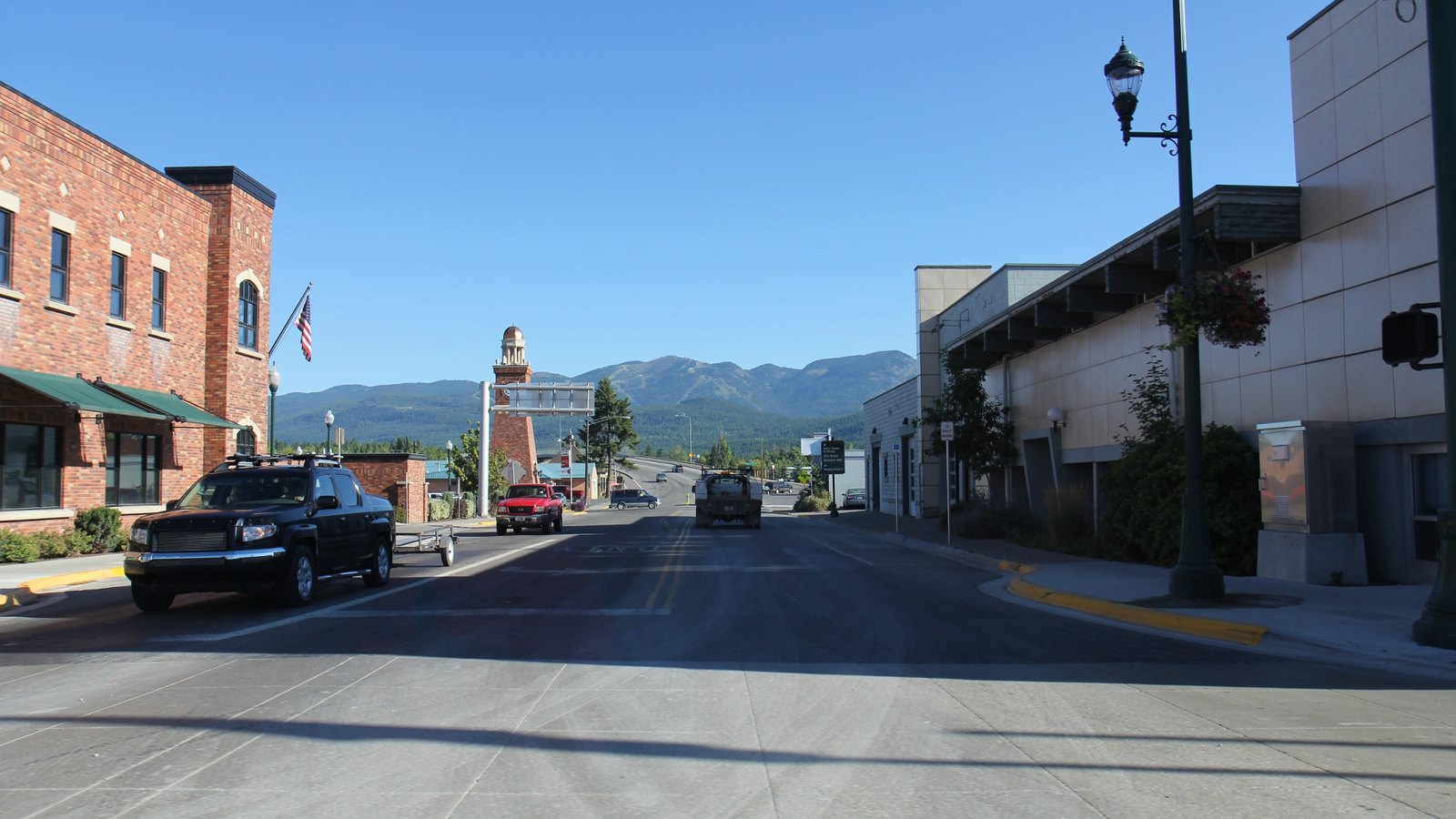

Whitefish is trying to bring back a downtown building rule it had for 44 years, this time as a way to soften the effect of a state law that now allows 60-foot buildings in its business core.
The Whitefish Planning Commission on Nov. 19 recommended a zoning text amendment that would require the upper floors of downtown buildings to step back 20 feet from the street once they rise above 35 feet. The City Council is scheduled to hold its own hearing and vote on Dec. 7.
What the rule would do
According to the city’s staff report (WZTA 26-03), the amendment adds one sentence to the bulk and scale standards of the WB-3 General Business District: no portion of a building above 35 feet “shall be closer than twenty (20) horizontal feet from any street right of way, exclusive of alleys.”
In practice, a taller building would rise two or three stories at the sidewalk, then set its higher floors back, the wedding-cake profile already common on newer downtown buildings. Staff proposed applying the rule to Central and Spokane avenues between Railway Street and East Fourth Street.
Under current WB-3 rules, buildings are capped at 45 feet and three stories, or 60 feet if they are entirely long-term multifamily housing or mixed-use buildings with housing on every floor above the ground floor. The 60-foot allowance took effect Oct. 1.
Why it disappeared, and why it is coming back
The stepback had been in the code since March 1982 and applied only to the WB-3 zone. The staff report says it was adopted for two reasons: to limit the visual impact of extra height from the street, and because the fire department at the time did not have a ladder truck that could reach 45 feet. The report’s findings say restoring it would again help firefighters reach upper floors and rooftops.
The city dropped the requirement in May with Ordinance 26-06, the package of zoning changes Whitefish adopted to comply with the Montana Land Use Planning Act. Planning Director Dave Taylor told commissioners the city had to fast-track those changes and was unsure whether it could keep stepbacks alongside the new 60-foot height, so it removed them, the Flathead Beacon reported.
Rather than challenge the state law, the City Council in September added a scenic resources section to its Vision Whitefish 2045 growth policy. That plan calls Central and Spokane an “Old Town Scenic Heritage Shopping District” and says new development there should respect the area’s historic scale and preserve views of Big Mountain. Staff told the commission that tying the stepback to that plan was the most legally defensible approach.
A wider area, on a split vote
The staff report laid out alternatives the city did not recommend: applying the rule to Central Avenue only, to the whole WB-3 zone as before, or to the larger Old Town Central District, which also takes in parts of Baker Avenue. It also looked at a 75-foot maximum building width and rejected it, noting several existing lots are wider than that, including a vacant five-lot property at 38 Central under one owner.
Commission Chair Whitney Beckham moved to expand the rule to the Old Town Central District. That amendment passed 4-3, with Beckham, commissioners Phil Boland and Scott Wurster and City Councilor Rebecca Norton in favor. Commissioners Mike Hein and Marti Brandt argued the original two-street area was the most defensible, the Beacon reported. The amended text then passed 6-1, with Mallory Phillips voting no on both.
The staff report also flags a design trade-off: a stepback at 35 feet “will cause buildings that go up to 60′ to look somewhat odd and less architecturally appealing” compared with one at 45 feet.
The rule would land as Whitefish adds housing, including the 146-unit Corridor Community complex, and as the state steers money to new homes through programs like the Montana Board of Housing tax credits. For more on land decisions around town, see the Flathead forest’s Big Spruce logging proposal and our real estate coverage.
Add The Montana Statesman as a preferred source on Google (opens in a new tab)