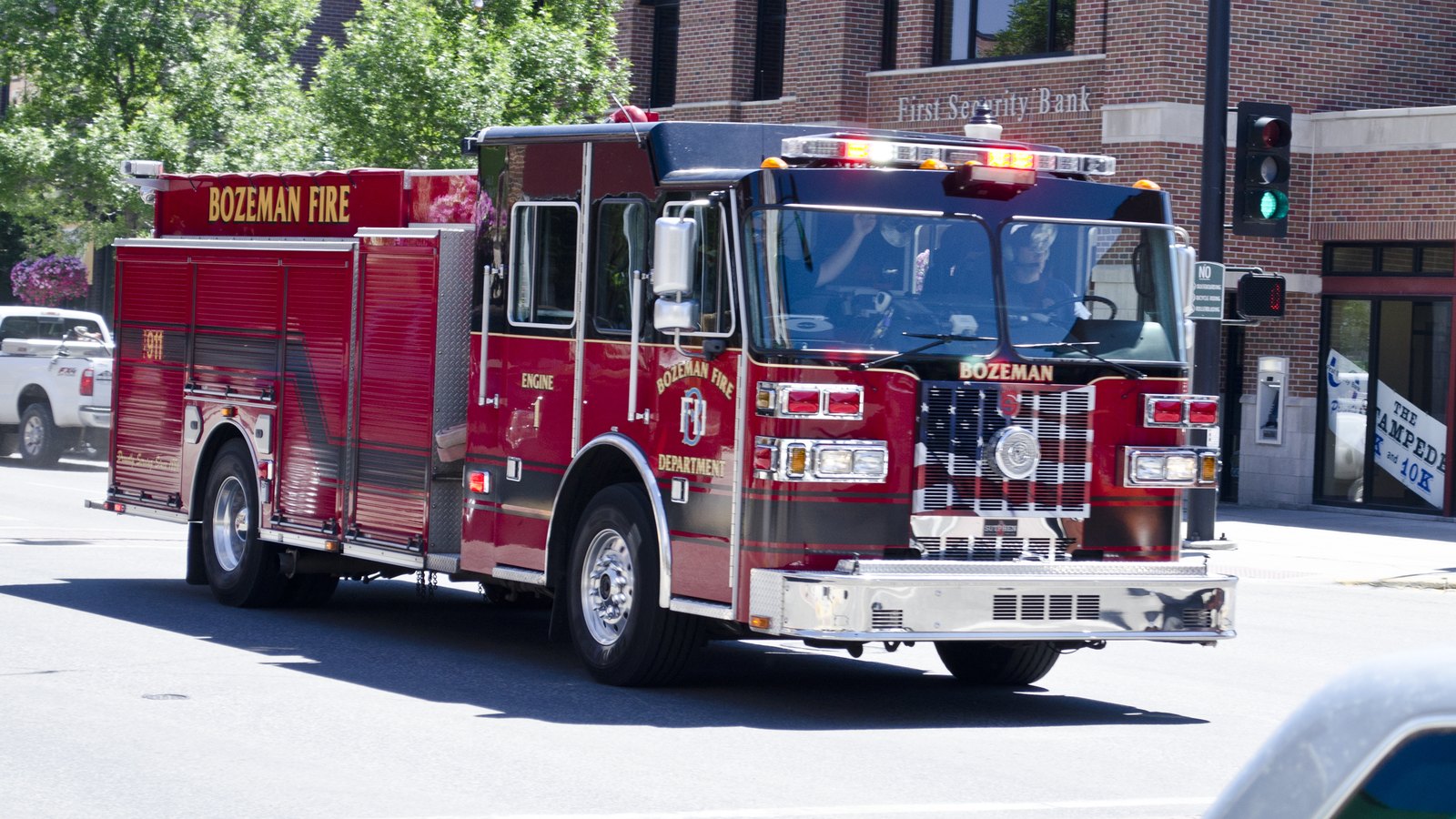

Bozeman will take about $166,000 in federal money for its fire department after the city attorney told commissioners that immigration-related strings attached to the grants are most likely unenforceable and would not change how the city operates.
The City Commission voted 5-0 on Tuesday, Nov. 17, to let City Manager Chuck Winn sign and accept two awards: an $80,000 HazMat Sustainment grant from the Montana Department of Emergency Services and an $85,754.54 Assistance to Firefighters grant from the Federal Emergency Management Agency. The combined total is $165,754.54.
Residents had urged the city to refuse the money, and the decision drew public backlash, the Bozeman Daily Chronicle reported. NBC Montana also covered the debate and the vote.
What the money pays for
According to the staff memo in the Nov. 17 commission packet, the HazMat grant is a Department of Homeland Security program run through the state. It pays for training and equipment for the fire department’s hazardous materials technicians, including calibration, testing, repairs and maintenance. Bozeman is one of six regional hazardous materials teams in Montana, along with Billings, Missoula, Kalispell, Helena and Great Falls. The commission approved the grant application in March 2025, and the memo calls the money essential to running the team.
The FEMA grant goes to firefighter health. On top of the annual wellness screening the city already provides, firefighters can opt in to 67 occupational cancer early-detection screenings and 34 advanced cardiac screenings paid for by the award.
The HazMat spending is already in the city’s adopted budget. The firefighter screenings will be paid from the general fund and may require a budget amendment later, the memo says.
The conditions, and the attorney’s advice
The trouble was in the fine print. City Attorney Greg Sullivan wrote that the HazMat agreement includes five articles, numbers 11, 19, 33, 60 and 68, that he sorted into three groups: immigration cooperation, anti-discrimination and compliance with presidential executive orders. He said the FEMA agreement contains similar language.
Sullivan pointed to two federal court cases. In Illinois v. Federal Emergency Management Agency, a federal court in Rhode Island in September 2025 blocked DHS from requiring the conditions of the states that sued and found that imposing them violated the Administrative Procedure Act. In County of Santa Clara v. Noem, a federal court in Northern California issued a similar ruling in November 2025 on the firefighter grant program. The federal government has appealed that case to the Ninth Circuit.
“I believe the conditions in both the MTDES and AFG grant agreements are most likely unenforceable,” Sullivan wrote. If a state or federal agency tried to enforce them, he added, there is “a reasonable likelihood the City would prevail in seeking an injunction against enforcement.”
He was careful about the limits of that advice. Because Bozeman is not a party to either case, he wrote, he “cannot issue a definitive opinion on enforceability.” Still, he concluded the city “need not adjust its practices” to comply with the disputed articles.
City staff told commissioners the language could not be struck from the agreements without losing the money, NBC Montana reported.
Police policy stays the same
Much of the public worry was that taking the grants would pull Bozeman police into closer work with Immigration and Customs Enforcement. Mayor Joey Morrison told NBC Montana that is not the case. He had pulled the HazMat item from an Oct. 6 agenda over the same concerns residents raised, he said, and asked for the legal review before bringing it back.
“There is nothing that has changed in the way in which the City of Bozeman’s Police Department does its business, works with the community or enforces laws,” Morrison told the station.
Bozeman’s existing police policy bars officers from holding someone solely over a civil immigration violation and directs them not to notify federal immigration officials when booking someone into jail, according to NBC Montana. Requests for help from federal immigration officers go to a division commander, who decides what help, if any, to give.
Commissioner Emma Bode said in a statement shared with NBC Montana that she concluded the grant “would not make it any easier for ICE to come into our community” and that commissioners, the city attorney and police are committed to the city’s policy of not cooperating with ICE on civil immigration enforcement.
In other local government news, Kalispell’s council dropped its home address rule for public comment. More coverage is in our Politics and Local News sections, including recent reporting from Bozeman on the snow station that tracks the city’s water supply.
Add The Montana Statesman as a preferred source on Google (opens in a new tab)