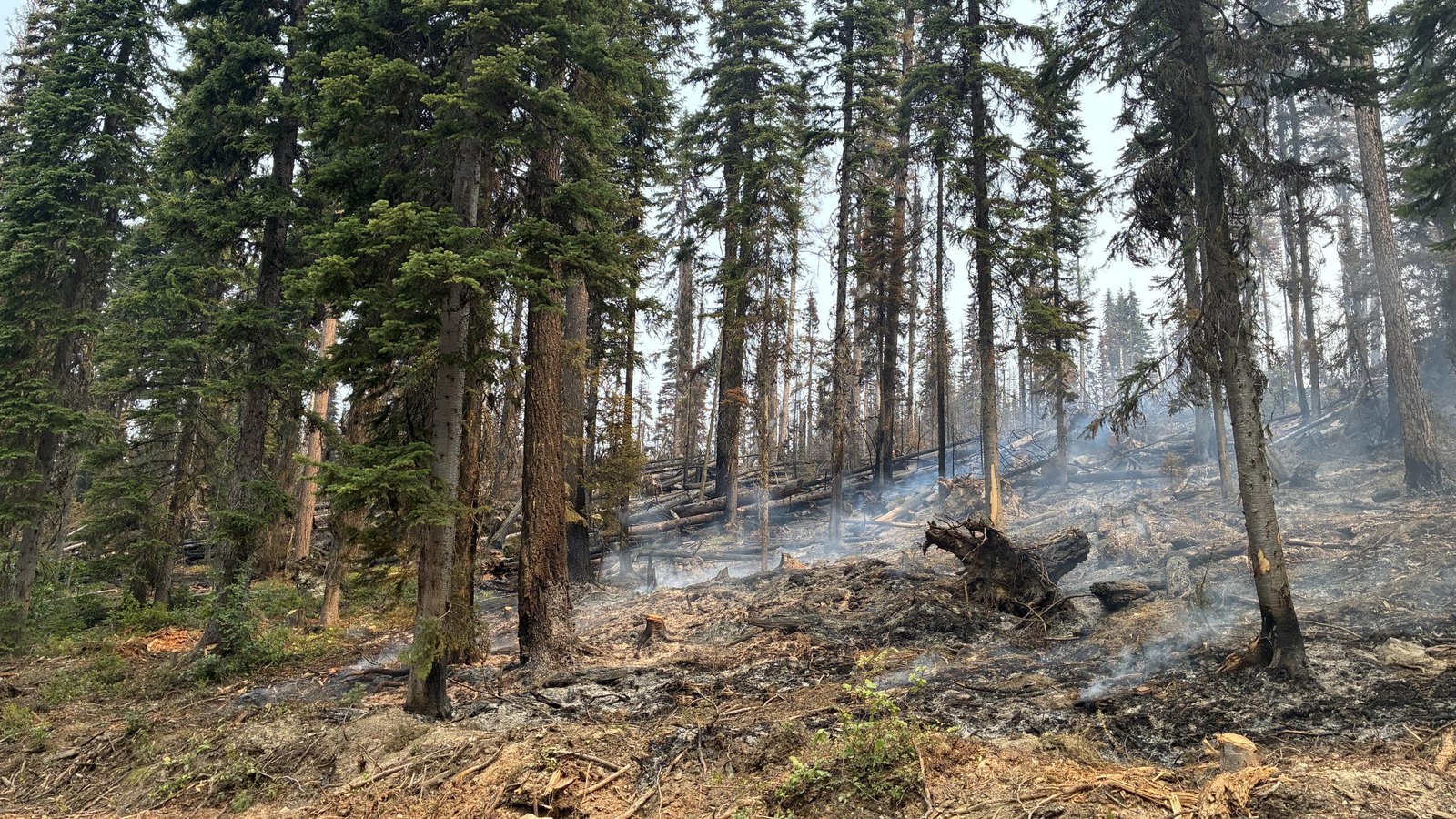
The Flathead National Forest wants to salvage-log dead and damaged trees on about 1,537 acres burned this summer by the Skillet Fire near Olney, and it is asking the public to weigh in first. Comments are most helpful if they arrive by Nov. 25, the forest says, and a final decision is expected in December.
The Tally Lake Ranger District released the proposed action on Nov. 11, according to a Forest Service release. Lightning started the fire in July, and it burned about 3,410 acres of national forest land. Much of that ground had already been hit by windstorms the previous winter, the release says, so the fire moved through stands that were damaged before it arrived.
What the salvage plan would do
The project page lays out about 1,537 acres of salvage harvest and 5.1 miles of temporary road to reach the burned stands. The stated goals are to speed forest recovery, prepare sites for replanting, cut down the heavy fuel left behind by the fire and blowdown, and recover timber value before it is lost.
“This project is focused on helping the landscape recover from the Skillet Fire while providing economic benefits to local communities that depend on forest products from our National Forest lands,” Tally Lake District Ranger Bill Mulholland said in the release.
Speed matters in salvage work. Fire-killed timber dries, cracks and draws bark beetles, and it loses value as a sawlog within a season or two. That is part of why the forest is using a faster review track than a standard timber sale would get.
Why there is no objection period
The project is being analyzed under the Forest Service’s National Post-Fire Recovery Environmental Assessment and uses the Agriculture Secretary’s Fuels and Forest Health Emergency Action Determination. Projects approved under that determination are not subject to the objection process in 36 CFR 218, the step that normally lets people who commented formally challenge a draft decision before it is signed.
In practice, that makes this comment window the main chance to shape where and how the cutting happens. The forest says public input will help it weigh local knowledge, spot concerns and adjust the project design.
The proposal lands in a hard season for Montana’s wood products industry. Marks Lumber in Clancy stopped sawing in early November after 37 years, and state and federal land managers recently widened a Good Neighbor partnership meant to put more federal timber up for sale and treatment.
How to comment
The proposed action, maps and supporting documents are on the project page. Comments can be filed through the Forest Service’s online comment form or mailed or hand-delivered to the Tally Lake District office, 650 Wolfpack Way, Kalispell, MT 59901. The forest’s contact for the project is Kira Powell, 406-291-6813.
Once the decision is signed in December, harvest could begin as contracts and ground conditions allow. More coverage of public lands and fire recovery is in our Energy & Environment section, and our guide to “Ready, Set, Go” explains what evacuation levels mean when a fire is burning.
Add The Montana Statesman as a preferred source on Google (opens in a new tab)