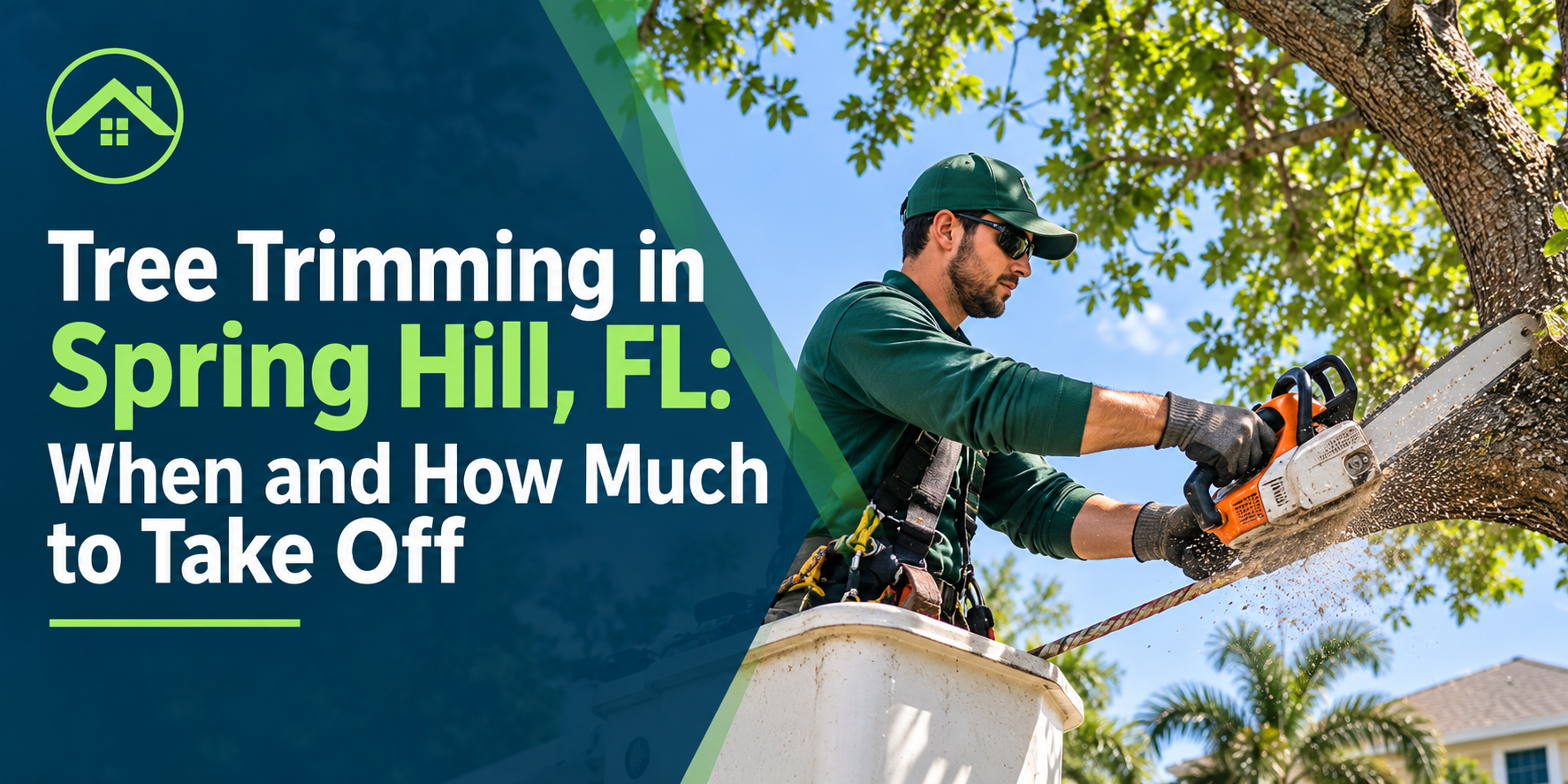
Trees are an important part of the landscape in Spring Hill, Florida. They provide shade, improve curb appeal, increase property value, and help keep outdoor spaces comfortable during hot summer days. However, maintaining healthy trees requires more than occasional watering and cleanup. Proper trimming is essential for controlling growth, removing damaged branches, and reducing potential safety hazards.
Florida’s weather creates unique challenges for homeowners. Heavy rainfall, strong winds, hurricanes, and year-round growing conditions can affect how trees develop and when they should be pruned. Knowing the right time to trim and how much to remove can make a significant difference in tree health and long-term safety.
Whether you have mature oak trees, palm trees, or ornamental landscaping, understanding proper tree maintenance can help protect your property and keep your yard looking its best.
When Is the Best Time to Trim Trees in Spring Hill, FL?
Timing is one of the most important factors in successful tree trimming. Although Florida’s warm climate allows many trees to grow throughout the year, certain seasons are better suited for specific pruning tasks.
Late Winter and Early Spring
Late winter and early spring are generally suitable times for trimming many shade trees. During this period, some trees experience slower growth, making it easier to identify dead, damaged, or crossing branches.
Pruning before the main growing season allows trees to begin producing new growth after the cuts have been made. It is also a good opportunity to remove weak limbs before heavy spring and summer storms arrive.
However, the ideal timing depends on the tree species. Flowering trees may require different pruning schedules to avoid removing developing flower buds.
Summer Maintenance
Summer is an important period for monitoring tree health in Spring Hill. Frequent thunderstorms, strong winds, and heavy rainfall can damage branches or expose structural weaknesses.
Homeowners should inspect their trees regularly and remove hazardous dead or broken limbs when necessary. Minor corrective pruning may also help maintain clearance around roofs, driveways, sidewalks, and utility areas.
Avoid excessive pruning during extremely hot weather because removing too much foliage can place additional stress on trees.
Fall and Hurricane Season Preparation
Florida’s hurricane season runs from June 1 through November 30. This makes proactive tree maintenance especially important for homeowners in Spring Hill.
Before severe weather develops, inspect trees for dead branches, weak connections, crowded canopies, and limbs hanging over structures. Professional pruning can help improve branch structure and reduce certain wind-related hazards.
Avoid last-minute heavy trimming immediately before a storm. Large pruning cuts can create additional stress and may not provide the intended protection.
How Much Should You Take Off a Tree?
Knowing how much to remove is just as important as knowing when to trim. Removing too many branches can weaken a tree, reduce its ability to produce energy, and make it more vulnerable to disease and environmental stress.
Follow the 25 Percent Guideline
For many established, healthy trees, removing no more than approximately 25% of the live crown during a single growing season is a useful general guideline. However, this is not a universal target or permission to remove that much every year.
Some trees require much less pruning, particularly mature trees, stressed trees, and species that do not respond well to aggressive cutting.
A qualified tree care professional can evaluate the tree’s age, condition, species, and structure before determining how much foliage can safely be removed.
Remove Dead and Damaged Branches
Dead, diseased, and broken branches should be prioritized during routine maintenance. These limbs can fall unexpectedly, create entry points for decay, and interfere with healthy growth.
Removing damaged branches also helps improve the tree’s overall appearance while reducing potential hazards.
Avoid Over-Thinning the Canopy
A tree’s canopy provides shade, supports photosynthesis, and protects its trunk and branches from direct sunlight. Removing too many interior or exterior branches can interfere with these functions.
Over-thinning can also encourage unwanted growth and leave the tree with an unnatural appearance.
The goal should be to maintain a balanced canopy rather than making the tree look unusually thin or heavily cut back.
Understanding Proper Tree Trimming Techniques
Correct pruning techniques help trees recover more effectively and maintain their natural structure.
Make Proper Pruning Cuts
Branches should generally be removed just outside the branch collar, which is the slightly swollen area where a branch connects to the trunk or another limb.
Cutting too close to the trunk can damage the branch collar, while leaving long stubs can interfere with proper wound closure.
Avoid Tree Topping
Tree topping involves cutting large upper branches or removing substantial portions of the crown to reduce a tree’s height. This practice can cause serious structural problems.
It often encourages weak, rapidly growing shoots that are more likely to break during storms. Topping also removes significant amounts of foliage and can permanently affect the tree’s natural shape.
Instead, professional arborists use appropriate reduction pruning techniques when controlling tree size is necessary.
Maintain Clearance Around Structures
Branches growing too close to roofs, windows, fences, and power lines can create maintenance and safety concerns.
Regular trimming helps maintain adequate clearance while preserving the tree’s natural form. Branches near electrical lines should only be handled by qualified utility professionals.
Why Professional Tree Trimming Matters in Spring Hill
Tree trimming may appear straightforward, but improper cuts can cause long-term damage. Different tree species respond differently to pruning, and Florida’s weather conditions make professional judgment particularly valuable.
Experienced tree care specialists understand how to identify structural weaknesses, recognize signs of disease, and determine which branches should be removed.
How tree trimming in Spring Hill, FL should be timed around Florida’s growing season and hurricane season, and how much canopy a healthy tree can spare. Homeowners comparing professional tree care options can also explore Robert Miller tree trimming Inverness for additional information about regional tree maintenance and professional trimming services.
Working with a knowledgeable tree care provider offers several benefits:
- Improved tree health: Proper pruning removes damaged growth and supports healthy development.
- Better storm preparation: Removing hazardous branches can reduce certain risks during strong winds.
- Enhanced curb appeal: Well-maintained trees create a cleaner, more attractive landscape.
- Increased property safety: Removing unstable limbs helps protect people, vehicles, and structures.
- Long-term maintenance: Regular inspections can identify problems before they become expensive emergencies.
Signs Your Trees Need Trimming
Not every tree requires pruning on a fixed schedule. Instead, homeowners should watch for visible signs that maintenance may be necessary.
Common warning signs include:
- Dead or hanging branches.
- Branches rubbing against each other.
- Limbs growing too close to buildings or roofs.
- Cracks or splits where major branches connect.
- Excessive growth blocking walkways or driveways.
- Branches interfering with visibility near roads.
- Visible storm damage or broken limbs.
If a tree has large cracks, significant leaning, or major structural damage, arrange a professional inspection rather than attempting extensive pruning yourself.
FAQs About Tree Trimming in Spring Hill, FL
1. How often should trees be trimmed in Spring Hill, FL?
Many established trees benefit from professional inspections every one to three years, although actual pruning frequency depends on species, age, growth rate, and condition. Some trees need more frequent attention, especially after storms.
2. Is it safe to trim trees during Florida’s summer?
Yes, necessary maintenance and removal of hazardous branches can be performed during summer. However, excessive pruning during extreme heat should generally be avoided because it can stress trees.
3. Can I remove 50% of a tree’s branches?
Removing half of a tree’s live canopy is generally excessive and can seriously weaken the tree. Most established trees should be pruned conservatively, with the amount determined by their health and species.
4. Should I trim trees before hurricane season?
Yes. Scheduling an inspection before hurricane season is a smart preventive measure. Removing dead, damaged, and structurally weak branches may reduce certain hazards during severe weather.
5. Does tree trimming help prevent storm damage?
Proper pruning can reduce some risks by addressing weak branches and improving tree structure. However, no trimming method can guarantee that a tree will survive hurricane-force winds.
6. Can I trim large tree branches myself?
Small, reachable branches may be manageable with appropriate tools and knowledge. However, large limbs, elevated branches, and trees near power lines should be handled by qualified professionals.
Conclusion
Proper tree trimming in Spring Hill, FL, is essential for maintaining healthy landscapes and preparing properties for Florida’s unpredictable weather. Knowing when to prune, how much foliage to remove, and which branches require attention helps homeowners protect their trees without causing unnecessary damage.
Late winter and early spring are useful periods for many routine pruning projects, while summer and fall inspections help identify storm-related concerns. Following conservative pruning practices, avoiding tree topping, and scheduling professional assessments can support healthier growth and safer outdoor spaces.
With consistent maintenance and expert guidance, Spring Hill homeowners can enjoy beautiful, well-maintained trees throughout the year while reducing preventable property risks.
Add The Montana Statesman as a preferred source on Google (opens in a new tab)