

The Bitterroot Valley added another name to its small but growing cluster of life-science employers on Oct. 8, when Tonix Pharmaceuticals broke ground on a commercial manufacturing plant on the north side of Hamilton.
The New Jersey-based drug developer plans to build the facility in phases over several years. Its first product is meant to be an experimental antibody intended to keep people from contracting Lyme disease after a tick bite, a link that local officials and company leaders noted ties back to work done in Hamilton decades ago.
What’s being built
According to KPAX, the plant will sit on 44 acres of land within a Targeted Economic Development District, a Montana tool that lets local governments use future property-tax growth in a defined area to pay for infrastructure that supports industry. Lederman told the Ravalli Republic the plant will be built in stages totaling about 200,000 square feet, with a first phase of roughly 25,000 square feet, according to a summary of that interview published by LifeScienceHistory.com.
Tonix CEO Seth Lederman told Montana Public Radio it would be another four to five years before products made at the site are available. He said employment would grow with the operation, starting at about 25 jobs and potentially reaching as many as 200. He told NBC Montana the full project would take at least four years to get up and running.
Former U.S. Sen. Max Baucus, who also served as ambassador to China, joined Lederman in turning the first shovels of dirt. Hamilton Mayor Dominic Farrenkopf, Ravalli County Commissioner Dan Huls and representatives of the University of Montana and local organizations also attended, NBC Montana reported.
The product: an antibody, not a vaccine
The facility’s initial focus is TNX-4800, which Tonix describes as a long-acting monoclonal antibody designed to block transmission of the bacteria that cause Lyme disease.
“It is not a vaccine,” Lederman told NBC Montana. “But it plays the role that vaccines traditionally play in the sense that it prevents the transmission of a bacterial infection.”
TNX-4800 is still in development and has not been approved by the U.S. Food and Drug Administration. The timeline Lederman gave for the plant reflects both construction and the regulatory steps any new drug must clear before it can be sold.
Tonix, founded about 17 years ago, works on treatments for conditions including fibromyalgia, depression and infectious disease. Lederman told KPAX that the company decided during the COVID-19 pandemic to put down roots in the Bitterroot, at a time when many companies were trying to build more domestic manufacturing capacity.
Why Hamilton
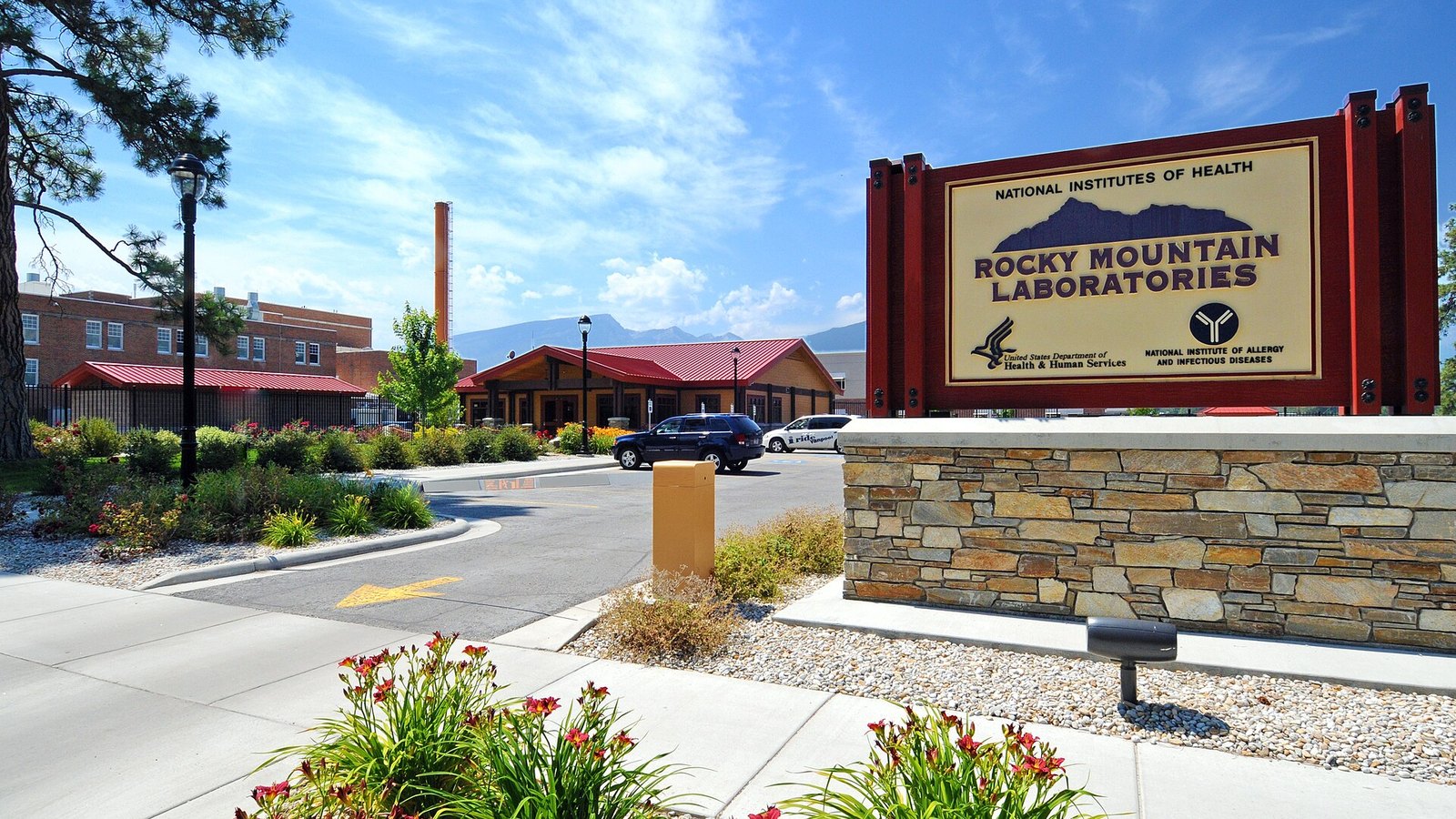
Hamilton, a city of about 5,000 people in Ravalli County, has been home to Rocky Mountain Laboratories, now part of the National Institutes of Health, since 1928. The lab grew out of efforts studying Rocky Mountain spotted fever, a tick-borne disease that was killing settlers in the valley in the early 1900s, and today is one of the National Institute of Allergy and Infectious Diseases’ research campuses.
It was a Rocky Mountain Laboratories scientist, Willy Burgdorfer, who in the early 1980s identified the bacterium that causes Lyme disease. That bacterium, Borrelia burgdorferi, carries his name. GSK has also operated in Hamilton for more than 40 years, and local boosters have taken to calling the area north of Hamilton a biotech corridor.
“It’s also coming full circle because so much important work on Lyme disease was done here,” Lederman said at the ceremony, as reported by Montana Public Radio.
Farrenkopf told the station that Hamilton is becoming a hub of bioscience research and industry. Julie Foster, executive director of the Ravalli County Economic Development Authority, told NBC Montana she had worked with Tonix for close to six years, and that the new jobs could give young people who leave for college a reason to come back or stay in the valley.
What comes next
For residents, the near-term change will be construction traffic and site work north of town. The bigger questions are years away: whether TNX-4800 succeeds in clinical testing and earns approval, how quickly the plant grows beyond its first phase, and how many of the eventual jobs go to people already living in the valley.
The project adds to a broader pattern of economic development in western Montana built around existing strengths rather than new ones. In the Bitterroot’s case, that strength is more than a century of research into ticks and the diseases they carry.
Sources
- NBC Montana, “Biopharmaceutical company breaks ground in Hamilton,” Oct. 8, 2026: nbcmontana.com
- Montana Public Radio, “Pharmaceutical company breaks ground on new facility in Hamilton,” Oct. 14, 2026: mtpr.org
- KPAX, “Tonix Pharmaceuticals breaks ground on new Hamilton manufacturing facility”: kpax.com
- LifeScienceHistory.com, “Tonix Pharmaceuticals breaks ground on Montana manufacturing facility” (citing the Ravalli Republic): lifesciencehistory.com