
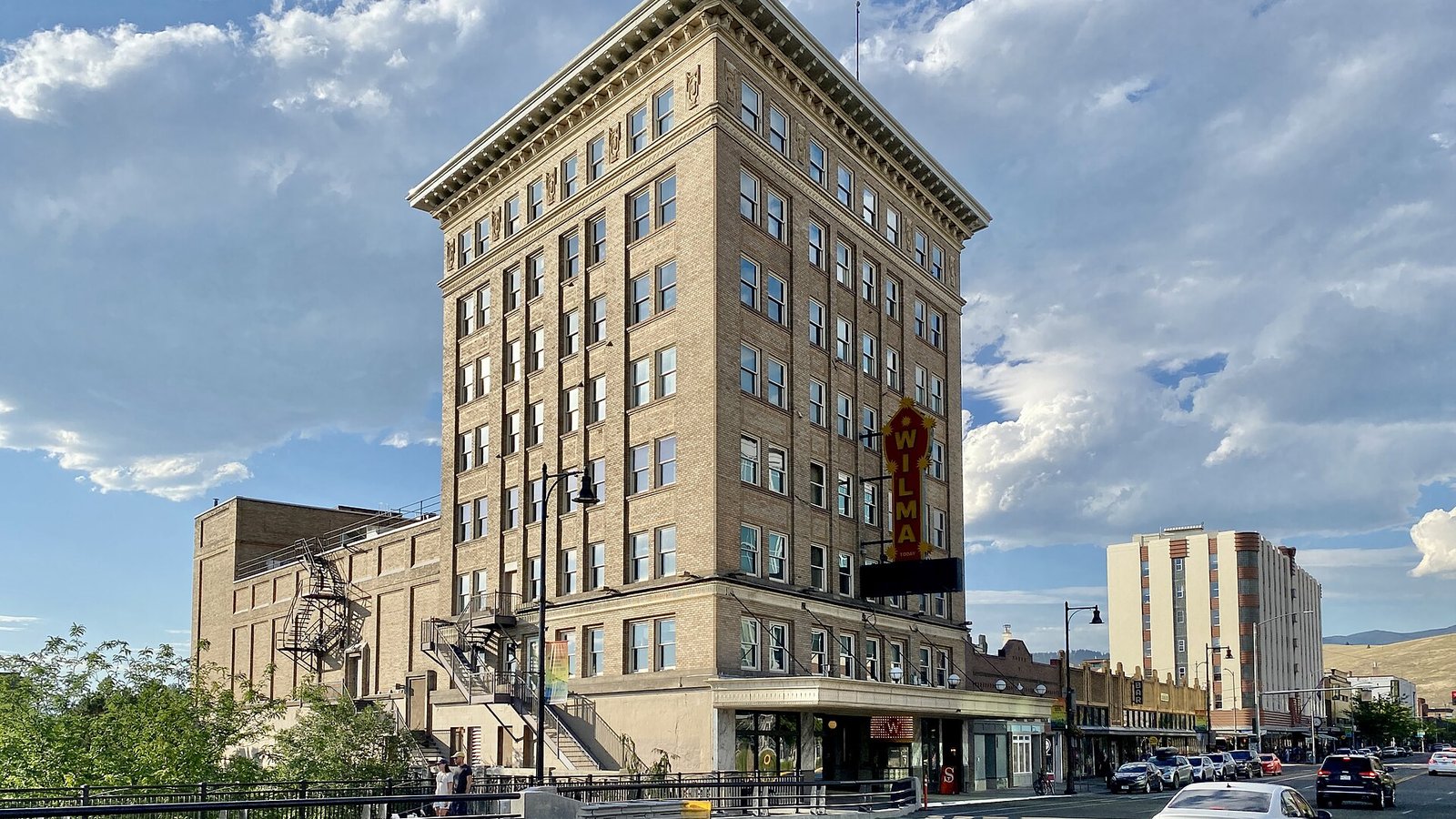

The Wilma sits where Higgins Avenue meets the Clark Fork River, and for most Missoulians it is simply the place where the show is. The theater opened in 1921 inside the Smead-Simons Building, built by William “Billy” Simons and named for his wife, the singer Edna Wilma Simons.
The original plan reflected the era. The building held offices and apartments above a theater meant for vaudeville and touring productions, and it later became a movie house. The ornate auditorium, the organ and the river setting made it one of the more elaborate theaters between Minneapolis and Seattle.
Like most single-screen downtown theaters, it had lean decades once multiplexes arrived. The building survived largely because it had other tenants, and because Missoula kept treating it as a landmark. It is listed on the National Register of Historic Places as part of the downtown historic district.
A concert room now
Today the Wilma works mainly as a mid-sized music venue, operated by Logjam Presents, the Missoula promoter that also runs the KettleHouse Amphitheater in Bonner and the Top Hat downtown. That arrangement gives the old room a steady calendar of touring acts, comedians and film events, and it means a single company can route artists between a 1,000-plus-seat theater, a bar stage and an outdoor amphitheater depending on how many tickets they can sell.
The economics matter beyond the box office. A sold-out night on Higgins fills restaurants and bars in the blocks around it, and it is part of why downtown Missoula has held on to foot traffic after dark better than many Montana downtowns.
The building’s upper floors are still apartments and offices, which is close to what the Simonses had in mind a century ago.