

Montana and the Bureau of Land Management signed a new agreement in Helena on Monday that lets the state do more of the cutting, thinning and burning on federal BLM ground, and keep timber money working on the land where it was earned.
Gov. Greg Gianforte, BLM Director Steve Pearce and Department of Natural Resources and Conservation Director Amanda Kaster signed the memorandum of understanding at the Capitol. It updates the Good Neighbor Authority partnership the two agencies have run since 2019, which has covered timber sale administration, fuels reduction and help with prescribed fire. The new version widens that to cover timber production, forest and watershed restoration, hazardous fuels and wildlife habitat work on BLM land, according to the governor’s office.
“When we actively manage our forests, we reduce hazardous fuels, support healthier habitats, and get more timber to our mills, all while protecting our communities, creating jobs, and leaving our public lands in better shape than we found them,” Gianforte said at the signing, KTVH reported. The podium carried a sign that read “make forests healthy again.”
Pearce called it part of a push for “coordinated, landscape-scale restoration” that lines up federal, state and local work. Kim Prill, acting state director for BLM Montana/Dakotas, put it more plainly: the agreement lets the two agencies “treat more acres” than either could alone.
What Good Neighbor actually does
The Good Neighbor Authority is a federal law that lets state forestry agencies plan and carry out restoration projects on federal land. In practice, that means a DNRC forester can lay out a timber sale, mark trees, run the sale and oversee a thinning or burn on federal ground, with the federal agency still signing off on the project. Congress expanded the program in the 2018 farm bill, including a provision that let states hold on to timber sale receipts to pay for more Good Neighbor work, according to the Congressional Research Service.
Monday’s agreement leans on that piece. Revenue from timber sales on BLM projects can be put back into planning, restoration and on-the-ground improvements, the state said, so a sale in one drainage can help pay to prepare the next one.
Most of Montana’s Good Neighbor work so far has been with the U.S. Forest Service, which manages far more timbered land in the state than the BLM does. In 2023, DNRC’s Good Neighbor program produced 10 commercial timber sales and 36 restoration projects, totaling 21.7 million board feet of timber valued at about $2.8 million and supporting 294 jobs, Kaster said at the time, Montana Public Radio reported.
The BLM’s forest base here is smaller but scattered across places where fire risk and homes overlap. BLM Montana/Dakotas has reported about 1.33 million acres of forest and woodland in its region, with roughly 883,000 of those acres available for management. Much of it sits in western and central Montana in patches next to state, private and Forest Service land, which is exactly the kind of checkerboard where one agency working alone tends to stall at the property line.
Mills, fire and the money question
The state framed the deal around two things: wildfire risk and the timber industry. Montana’s forest products sector supports more than 10,000 jobs and brings in hundreds of millions of dollars a year, according to the governor’s office, and mills have said for years that a steady supply of logs off federal land is the difference between running full shifts and closing.
“Working side-by-side with BLM means more tools, more capacity, and more impact as we tackle hazardous fuels and strengthen the landscapes our communities rely on,” Kaster said.
What the agreement doesn’t spell out publicly is a target. The release did not give an acreage goal, a timber volume or a budget for the expanded BLM work, and it didn’t name the first projects that will move under it. A signed copy of the MOU and a video of the press conference are posted on the state newsroom. The Forest Service side of the state’s partnership has carried specific volume goals in the past, so whether the BLM piece gets its own numbers will be worth watching once DNRC starts laying out sales.
There is also the federal staffing picture. Federal land agencies have lost staff over the past two years, and handing more of the planning and contract work to state foresters is one way to keep projects moving with fewer federal employees. Supporters see that as practical. Some conservation groups have raised concerns in the past that Good Neighbor projects get less public scrutiny than traditional federal timber sales, since the state does much of the legwork, though the projects still have to clear federal environmental review.
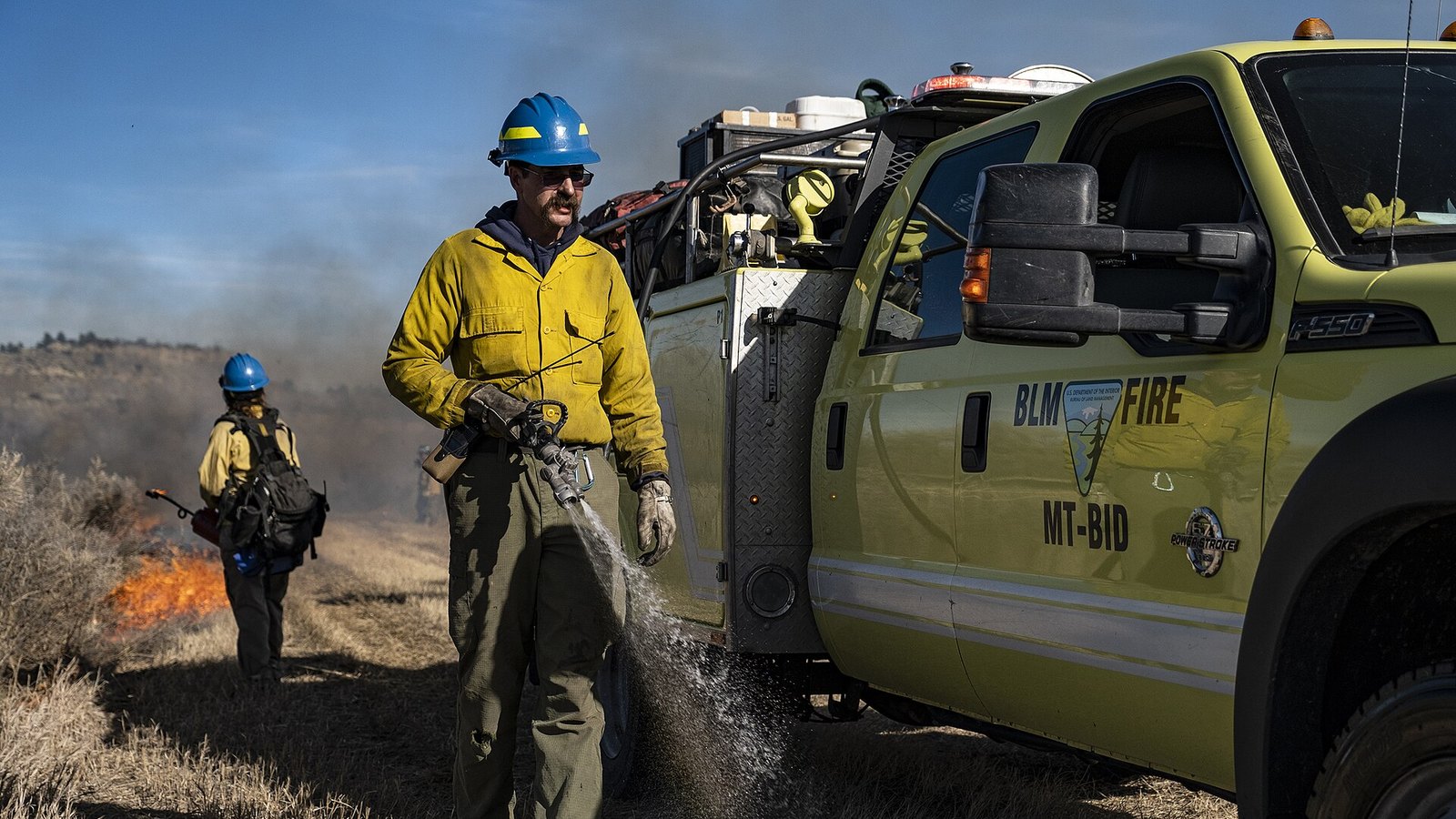
For people living near BLM timber, the more immediate effect could be more thinning crews and prescribed burns in the next few seasons, the kind of work BLM fire crews have done in recent years at places like Pompeys Pillar National Monument east of Billings. Burn windows in Montana are narrow, usually spring and fall, and the agencies say pooling crews should let them use more of those windows than they could separately.
Add The Montana Statesman as a preferred source on Google (opens in a new tab)