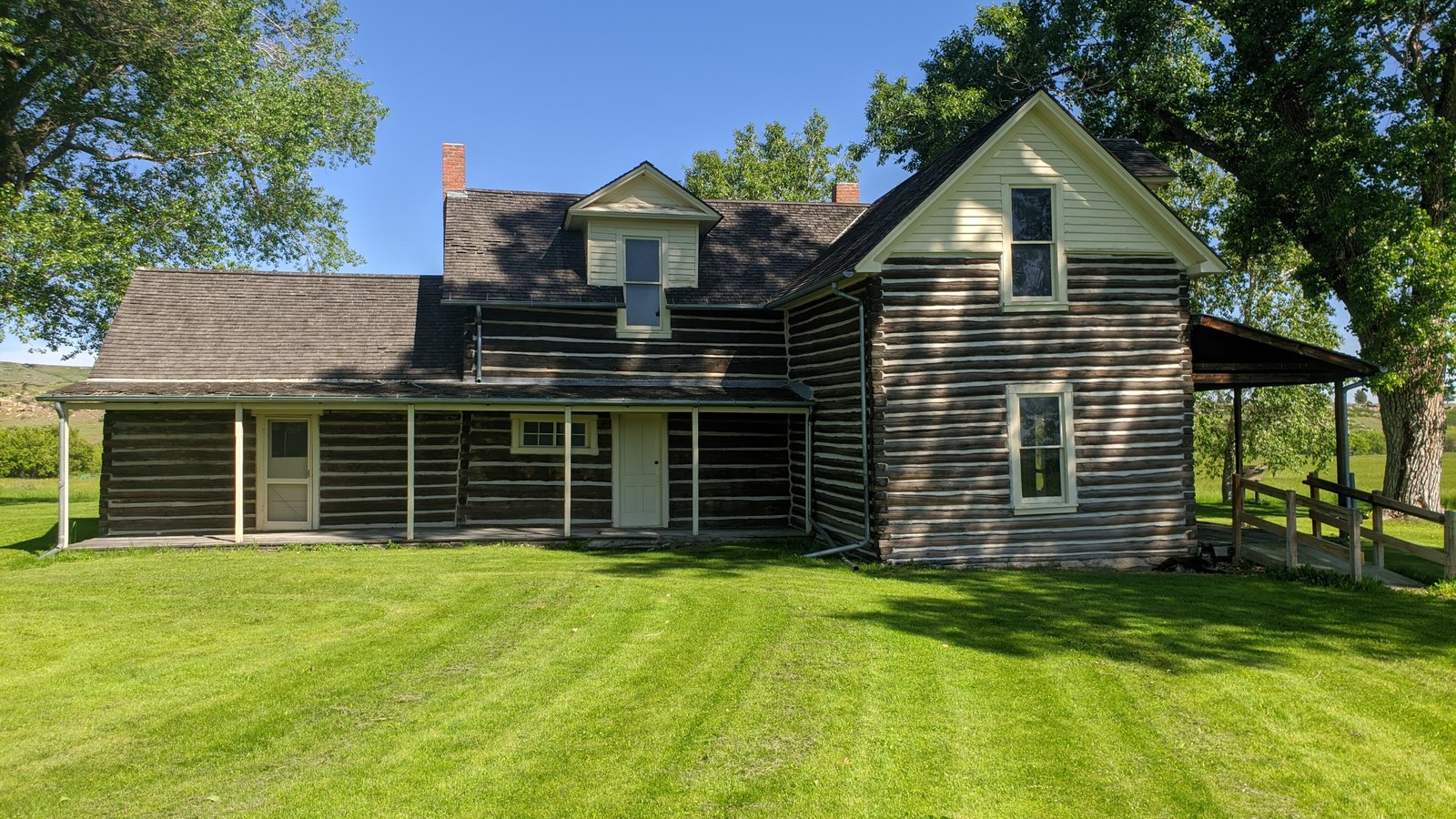

A two-story log house in Pryor, south of Billings, still stands in the cottonwoods where Chief Plenty Coups built it in 1884. He lived there for nearly half a century, and before he died he gave it away, with the land around it, as a “park for all people.”
Plenty Coups, known in his own language as Alek-Chea-Ahoosh, led the Apsáalooke, or Crow, people through the end of the buffalo days and into the reservation era. Montana Fish, Wildlife & Parks, which runs the site as Chief Plenty Coups State Park, describes him in its park management plan as a mediator rather than a war leader, someone respected by both tribal and federal officials.
A life from the buffalo days to the Depression
Plenty Coups lived from 1848 to 1932. The management plan, drawing on a 1993 historical study by C. Adrian Heidenreich, notes that his 84 years ran from nomadic buffalo hunting through the Plains wars and the Battle of the Little Bighorn, to reservation life, World War I, Native American citizenship and the edge of the New Deal.
He was known as a worthy opponent in battle in his younger years and as a diplomat later on. The plan says he followed his own Apsáalooke religion, which began with vision quests as a young man, and took the chickadee as his example: be observant and learn from others. He applied that lesson to life alongside the growing non-Native population, both on the reservation and in Washington.
Into his 80s, he negotiated with Indian agents, senators and members of Congress, tribal attorneys, railroads and stockmen over land sales, grazing, oil and gas leases, irrigation, education and tribal rights. He was also a farmer. His fields at Pryor were irrigated as early as the 1890s, and he grew hay, grain and vegetables there.
Arlington, 1921
His best-known moment came far from Montana. In November 1921, Plenty Coups represented all Native Americans at the dedication of the Tomb of the Unknown Soldier at Arlington National Cemetery. By then, according to the plan, he was known as “the Chief of All Chiefs.” Arlington still keeps Plenty Coups artifacts in the display room of its Memorial Amphitheater, where cemetery staff walked visitors through them in 2022.
A gift that became a state park
In 1928, Plenty Coups deeded 189.2 acres of his allotment to the U.S. government. Forty acres were set aside as a park for all people, and the rest was meant to earn money to support it. The government could not legally accept the title, but it held a ceremony in 1929 in which Brig. Gen. James G. Harbord, a World War I commander, accepted the land as a gift on behalf of the United States.
After his death in 1932, Big Horn County took title and leased out the farm to pay for upkeep. The Billings Kiwanis Club became the park’s trustee in 1951, a link that grew out of Plenty Coups’ friendship with Kiwanis President George Snell. In 1965 the site was transferred to the state parks system. The home was listed on the National Register of Historic Places in 1968, and the park’s museum opened in the summer of 1973.
On Jan. 20, 1999, Interior Secretary Bruce Babbitt designated the home a National Historic Landmark, Montana’s 22nd.
What is there now
The park covers about 195 acres. Along with the house, it includes his log store building, the remnants of his orchard and irrigation ditches, and the graves of Plenty Coups and two of his wives, Kills Together and Strikes the Iron. The sacred Medicine Spring that first drew him to the site still flows year-round, and Apsáalooke people use its water for healing and ceremonies. The museum holds more than 600 objects, plus photographs and papers that belonged to Plenty Coups.
The park sits on the Crow Reservation and was planned with the Crow Tribe, Little Big Horn College and a local advisory council. Visitors should check FWP’s site for seasonal hours before making the drive.
Plenty Coups joins other Montanans in our Newsmakers profiles, among them Jeannette Rankin, the first woman in Congress, and Senate Majority Leader Mike Mansfield. For more from the Billings area, see our local news.
Add The Montana Statesman as a preferred source on Google (opens in a new tab)