
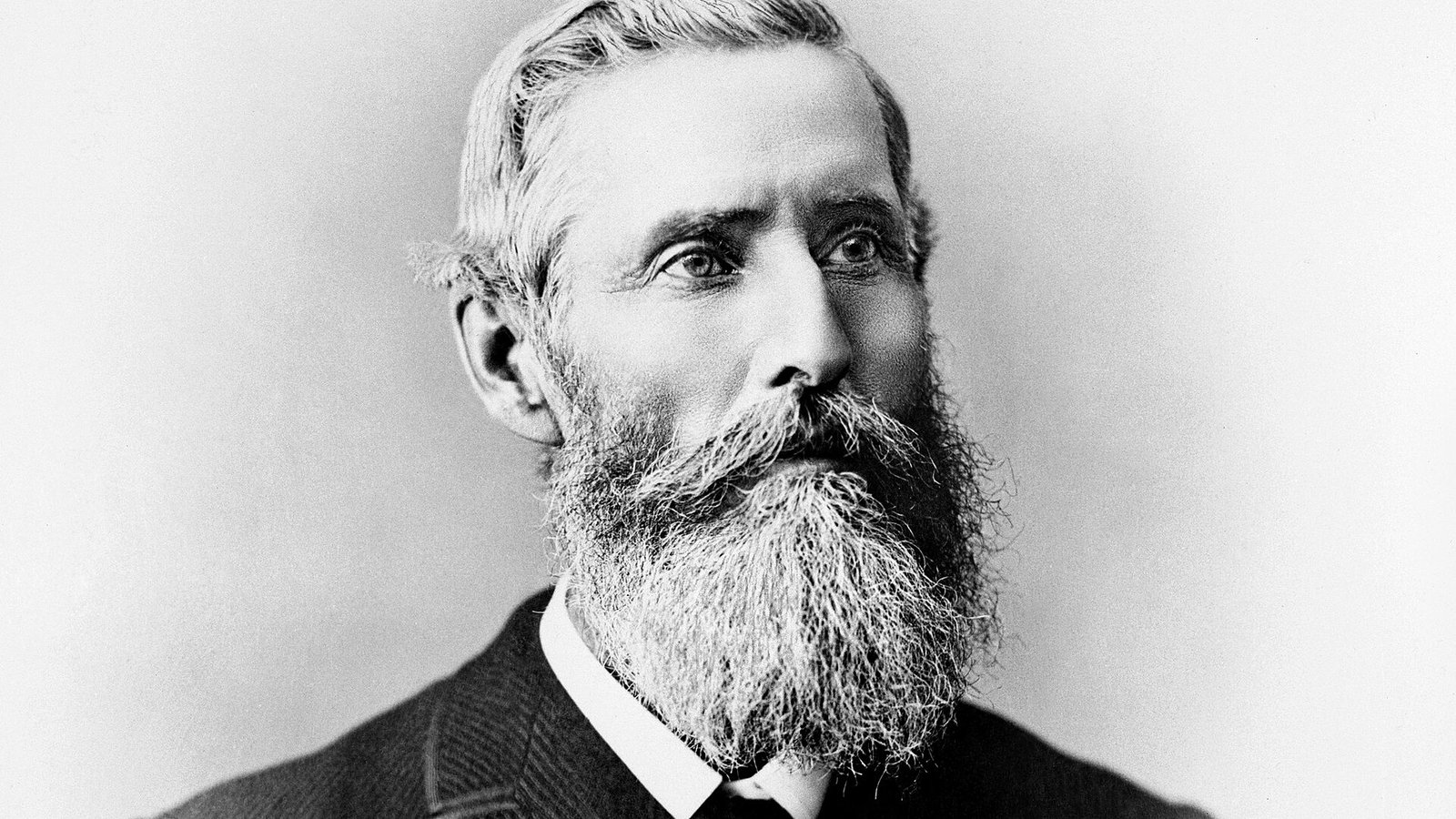

Few people were present for as much of early Montana history as Granville Stuart, and few left as much writing about it.
Stuart was born in Virginia in 1834 and came west with his brother James during the California gold rush. In 1858 the brothers were prospecting in the Deer Lodge Valley, where they found gold at Gold Creek, an early strike that helped draw miners into what would become Montana. Over the next years Stuart ran stores, worked as a miner and lived in Bannack and Virginia City during the gold camps’ rough early days.
Cattleman
In 1880 Stuart became the manager and part owner of the DHS Ranch in the Judith Basin and Fergus County area, and he was a leading figure in the open-range cattle industry. He served as president of the Montana Stockgrowers Association.
That is also where the hardest part of his story sits. In 1884, amid complaints about horse and cattle theft, Stuart led a vigilante group, later called Stuart’s Stranglers, that killed a number of suspected rustlers along the Missouri and Musselshell rivers. Estimates of the dead vary widely, from about 15 to more than 60, and there were no trials.
The open range collapsed in the terrible winter of 1886-87, and Stuart’s ranching career faded. He was later appointed U.S. minister to Uruguay and Paraguay and spent his last years writing history. His memoir, “Forty Years on the Frontier,” was published in 1925, after his death in 1918.
Stuart was married to Awbonnie Tookanka, a Shoshone woman, and they raised a large family. Historians today treat his writing as an essential source and his record as one that needs to be read in full.