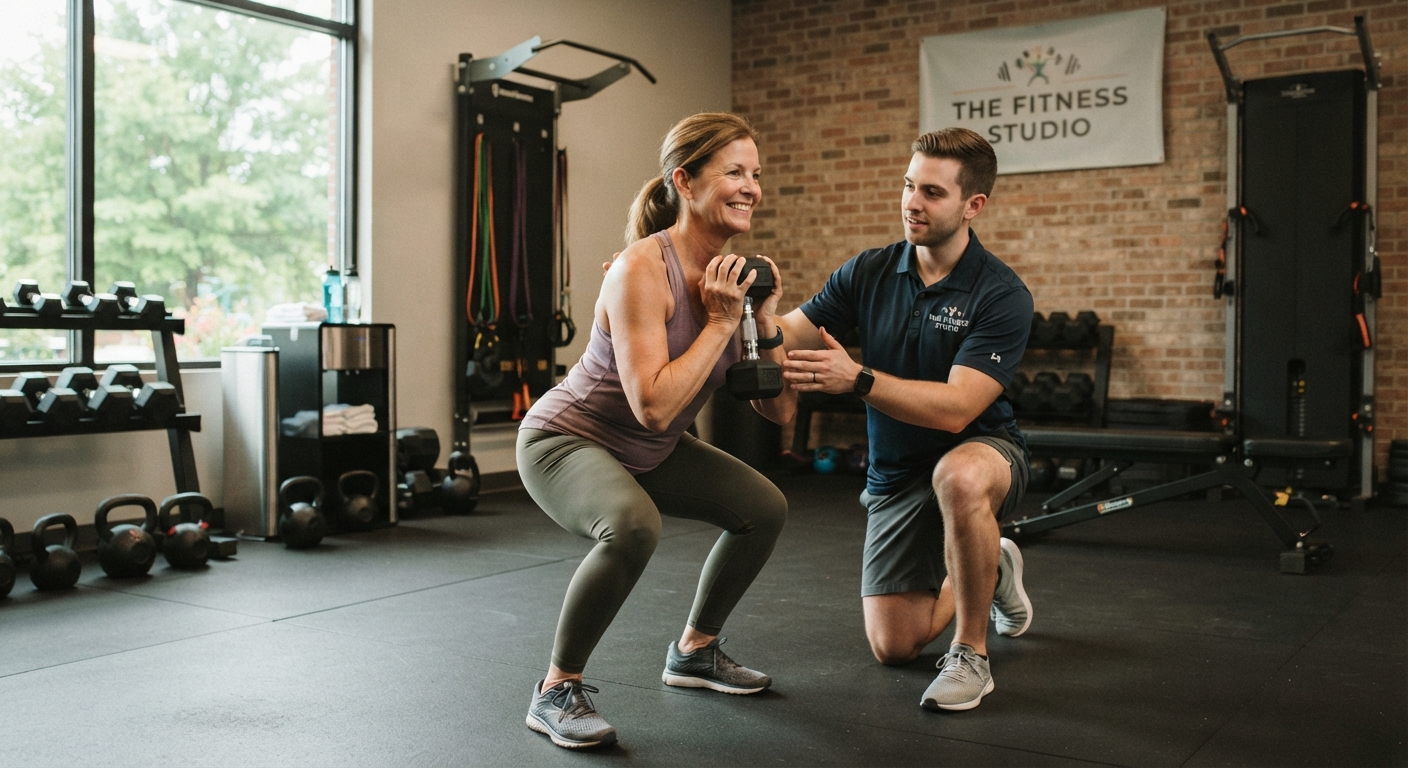
Why Personalized Fitness Training Matters
Every person has different fitness needs, abilities, and goals. Someone who wants to improve cardiovascular endurance may require a different workout routine from someone focused on building strength or improving mobility. Even people with similar goals can have different starting points depending on their activity levels, experience, and physical limitations.
This is why personalized training is valuable. A personal trainer can evaluate an individual’s current fitness level, discuss their objectives, and develop an exercise program that reflects their needs.
Rather than relying on a one-size-fits-all approach, personalized fitness training considers several important factors, including:
- Current strength and endurance levels
- Exercise experience and physical ability
- Short-term and long-term fitness goals
- Preferred workout styles
- Scheduling and lifestyle considerations
- Areas that may require additional attention
For people searching for The Fitness Studio Ballantyne personal trainer, choosing a training approach that prioritizes individual needs can be an important step toward building a sustainable exercise routine.
The Benefits of Working with a Personal Trainer
Starting a fitness journey can feel overwhelming, particularly for individuals who are unfamiliar with exercise equipment or strength training techniques. A personal trainer provides direction and helps make workouts easier to understand.
Proper Exercise Form and Technique
Performing exercises correctly is essential for effective training. Poor technique can place unnecessary stress on muscles and joints, potentially increasing the risk of injury. A personal trainer can demonstrate proper movement patterns, explain exercise techniques, and provide feedback throughout a workout.
Learning the correct form also helps individuals get more out of each exercise. Whether performing squats, lunges, push-ups, or resistance exercises, proper technique allows people to train more efficiently.
Consistent Motivation and Accountability
One of the biggest challenges of maintaining a fitness routine is staying consistent. Busy schedules, family responsibilities, work commitments, and everyday stress can make it difficult to prioritize exercise.
Working with a personal trainer introduces accountability into the process. Having scheduled training sessions gives individuals a reason to stay committed and continue making progress.
A trainer can also provide encouragement when workouts become challenging. Instead of giving up when progress feels slow, clients can receive guidance on adjusting their approach and maintaining realistic expectations.
Customized Workout Programs
A structured workout program helps individuals understand what they should be doing and why. Personal trainers can organize exercises around specific goals, making each session more purposeful.
For example, a person interested in improving overall fitness may benefit from a combination of resistance training, cardiovascular exercise, flexibility work, and mobility exercises.
Those focused on strength development may need progressive resistance exercises that gradually challenge their muscles. A well-designed program can evolve as an individual’s fitness level improves.
Strength Training for Long-Term Health
Strength training is an important part of maintaining physical health at different stages of life. Although many people associate weightlifting with bodybuilding, resistance exercises offer benefits that extend beyond building larger muscles.
Regular strength training can help improve muscular strength, support bone health, enhance balance, and make everyday activities easier.
For example, stronger muscles can help individuals perform daily movements such as carrying groceries, climbing stairs, lifting household items, and playing with their children.
Strength training can also support healthy aging. As people grow older, maintaining muscle strength and physical function becomes increasingly important. A properly planned exercise routine can help adults remain active and independent.
A personal trainer can introduce resistance exercises gradually, taking into account experience, mobility, and individual capabilities. This allows beginners to develop confidence while giving experienced exercisers opportunities to challenge themselves.
Improving Cardiovascular Fitness and Endurance
Cardiovascular exercise supports heart and lung health while helping individuals improve their stamina. Activities such as walking, cycling, swimming, and other forms of aerobic exercise can become valuable parts of a balanced fitness program.
Improving endurance does not necessarily require spending hours performing intense workouts. Consistent activity at an appropriate intensity can help people gradually build their cardiovascular capacity.
A personalized training program may combine aerobic exercise with resistance training to create a more balanced approach.
For individuals with demanding schedules, shorter and well-structured workout sessions may be easier to maintain than lengthy exercise routines. The key is finding activities that fit individual lifestyles and can be performed consistently.
The Importance of Fitness for Healthy Aging
Staying physically active becomes particularly important as people get older. Natural changes in muscle mass, balance, flexibility, and endurance can affect how comfortably individuals perform everyday activities.
Exercise can help address some of these changes by supporting strength, coordination, and mobility.
A well-rounded fitness program for healthy aging may include:
- Resistance exercises to maintain muscle strength
- Balance activities to improve stability
- Mobility exercises to support comfortable movement
- Cardiovascular activity to improve endurance
- Flexibility exercises to maintain a useful range of motion
However, exercise programs should reflect each person’s abilities and health considerations. Individuals returning to exercise after a long break or managing physical limitations may benefit from discussing their plans with an appropriate healthcare professional.
The goal is not necessarily to perform the most difficult workouts. Instead, it is to develop physical abilities that support independence, confidence, and quality of life.
Creating a Fitness Routine That Fits a Busy Lifestyle
Finding time for exercise can be difficult, especially for people balancing professional responsibilities, family commitments, and personal obligations. A fitness program that demands an unrealistic amount of time may become difficult to maintain.
This is why flexibility and planning are important.
A personal trainer can help organize workouts around an individual’s availability and goals. Establishing a realistic schedule makes it easier to develop consistency without allowing exercise to interfere unnecessarily with other responsibilities.
Some individuals may prefer training sessions several times a week, while others may benefit from a less frequent schedule combined with independent physical activity.
The most effective routine is one that can be maintained over time. Starting with manageable goals and gradually increasing workout intensity can help individuals build confidence without feeling overwhelmed.
For residents looking for The Fitness Studio Ballantyne personal trainer, personalized scheduling and structured guidance can help make fitness a more practical part of everyday life.
Why Setting Realistic Fitness Goals Is Important
Many people begin exercising with ambitious expectations. They may want to lose a significant amount of weight, build muscle quickly, or dramatically improve their endurance within a short period.
While motivation is valuable, setting realistic goals is essential for maintaining long-term commitment.
A good fitness goal should be specific, measurable, and achievable. Instead of simply saying, “I want to get stronger,” someone might aim to improve their performance on specific strength exercises over several weeks.
Other examples include:
- Completing three planned workouts each week
- Improving walking endurance
- Increasing strength through progressive resistance training
- Developing better balance and mobility
- Establishing a consistent exercise schedule
Tracking progress can also provide motivation. Improvements in exercise technique, energy levels, strength, and endurance are meaningful achievements, even when changes in physical appearance take longer.
A personal trainer can help clients evaluate their progress and adjust their programs when necessary.
The Role of Recovery in a Successful Fitness Program
Exercise challenges the body, but recovery is an equally important part of physical development. Muscles and other tissues need adequate recovery time after demanding workouts.
Ignoring recovery can lead to excessive fatigue, reduced performance, and difficulty maintaining a consistent routine.
A balanced fitness program should consider several recovery factors, including adequate sleep, hydration, appropriate nutrition, and rest between challenging training sessions.
Stretching and mobility exercises may also help individuals maintain comfortable movement and address areas of stiffness.
Rest days do not mean that someone must avoid all physical activity. Gentle walking or other low-intensity movement may be appropriate depending on the individual’s needs and training schedule.
Understanding when to push harder and when to recover is an important part of developing a sustainable approach to fitness.
Choosing the Right Personal Training Environment
The environment in which someone exercises can influence their overall experience. Some individuals enjoy busy gyms with many equipment options, while others prefer a more personalized atmosphere where they can concentrate on their training goals.
When choosing a personal training service, it is helpful to consider the trainer’s communication style, experience, program structure, and ability to accommodate individual needs.
Potential clients should also ask about training methods, session scheduling, fitness assessments, and how progress is monitored.
A positive training relationship should encourage open communication. Clients should feel comfortable discussing their goals, asking questions, and sharing concerns about particular exercises.
The right environment can make exercise feel less intimidating and help individuals develop a more positive relationship with physical activity.
Taking the Next Step Toward a Healthier Lifestyle
Improving fitness is a gradual process that requires patience, consistency, and a willingness to develop healthier habits. There is no single workout routine that works for everyone, and meaningful progress often comes from making small improvements over time.
Whether the objective is improving strength, increasing endurance, supporting healthy aging, or becoming more physically active, professional guidance can help individuals approach their goals with greater confidence.
For those exploring The Fitness Studio Ballantyne personal trainer, learning about personalized training options can be a useful starting point. The Fitness Studio represents an opportunity to make fitness a more structured part of everyday life while working toward individual health and performance goals.
Ultimately, a successful fitness journey is about more than completing workouts. It is about developing habits that support long-term well-being, improving physical capabilities, and feeling more confident in everyday activities. With realistic goals, appropriate exercise, and consistent effort, individuals can build a foundation for a stronger and healthier future.
Frequently Asked Questions
1. What are the benefits of hiring a personal trainer?
A personal trainer provides exercise guidance, customized workout plans, motivation, and accountability. They can also help individuals learn proper exercise techniques and develop routines that support their fitness goals.
2. Is personal training suitable for beginners?
Yes. Personal training can be particularly helpful for beginners because it provides structured instruction and guidance. A trainer can introduce exercises gradually and help clients become more comfortable with fitness equipment and different movements.
3. How often should I work with a personal trainer?
The ideal frequency depends on individual goals, availability, fitness experience, and budget. Some people train several times per week, while others schedule fewer sessions and complete additional workouts independently.
4. Can strength training help with healthy aging?
Yes. Strength training can help older adults maintain muscle strength, support bone health, improve balance, and preserve the physical abilities needed for everyday activities. Exercise programs should be adjusted to individual abilities and health considerations.
5. How long does it take to see fitness results?
Results vary depending on starting fitness levels, workout consistency, nutrition, recovery, and individual goals. Some people notice improvements in energy and exercise performance within a few weeks, while visible physical changes may take longer.
6. What should I look for when choosing a personal trainer?
Consider the trainer’s qualifications, experience, communication style, training methods, and ability to create a program around your goals. It is also helpful to discuss scheduling, progress tracking, and any physical limitations before beginning.
7. Does personal training only focus on weight loss?
No. Personal training can support many objectives, including muscle development, strength, cardiovascular endurance, mobility, balance, athletic performance, and healthy aging.
8. Why is consistency important in fitness?
Consistency allows the body to adapt gradually to physical activity. Regular exercise helps individuals develop strength, endurance, and healthier habits that can contribute to long-term well-being.
Add The Montana Statesman as a preferred source on Google (opens in a new tab)