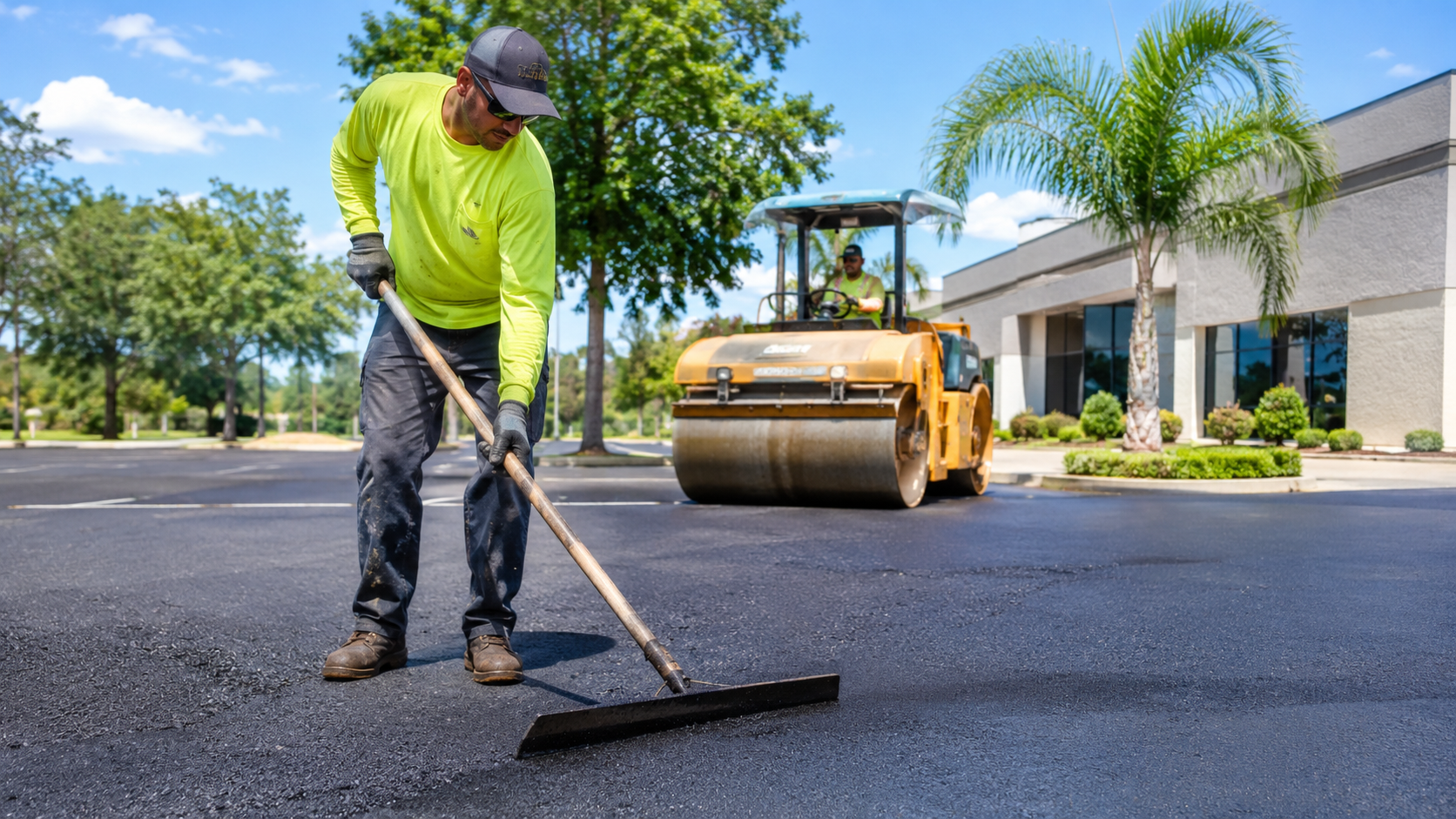
Why Asphalt Is a Popular Choice for Florida Properties
Asphalt remains a popular paving material for residential, commercial, and industrial properties because of its practical benefits. It provides a smooth driving surface, accommodates regular vehicle traffic, and can be maintained through established repair and preservation methods.
One major advantage of asphalt is its flexibility. Unlike more rigid paving materials, asphalt can accommodate some movement in the underlying ground without immediately developing the same types of structural damage associated with rigid surfaces. This characteristic makes it a practical option for many properties in Southwest Florida.
Another benefit is its relatively quick installation and usability. Depending on project size, weather conditions, and construction requirements, asphalt pavement can often be ready for use sooner than some alternative paving materials.
Asphalt also offers a clean and professional appearance. A freshly paved driveway or parking lot can improve the overall presentation of a property, making it more inviting to residents, customers, employees, and visitors.
However, asphalt does not remain in excellent condition without proper care. Sun exposure, water infiltration, vehicle loads, and natural aging gradually affect the pavement. That is why choosing suitable paving methods and establishing a maintenance routine are important considerations for property owners.
Understanding the Importance of Professional Asphalt Paving
A successful asphalt paving project begins long before the asphalt mixture is placed on the ground. Proper preparation is essential because the strength and durability of the finished pavement depend heavily on the conditions underneath it.
One of the most important steps is evaluating the existing surface and the ground beneath it. Contractors need to determine whether the area requires excavation, grading, drainage improvements, or a new base layer. Skipping these steps can contribute to premature pavement failure.
Base preparation is particularly important in areas like Cape Coral, where rainfall and moisture conditions can affect the stability of the ground. A poorly prepared base may shift, settle, or lose stability over time, resulting in uneven pavement and recurring cracks.
Grading is another essential part of the process. Asphalt surfaces should be designed to direct water away from buildings and other vulnerable areas. Standing water can gradually weaken pavement and contribute to potholes, cracking, and deterioration.
When property owners explore Paramount asphalt paving Cape Coral, they should consider the importance of a complete paving process rather than focusing exclusively on the final asphalt surface. Proper planning, preparation, installation, and compaction all contribute to long-term performance.
Asphalt Sealcoating: Protecting Pavement From Florida’s Weather
While asphalt paving creates a new surface, sealcoating helps preserve it. This maintenance process involves applying a protective coating over existing asphalt to reduce exposure to damaging environmental conditions.
In Cape Coral, asphalt surfaces experience considerable sunlight throughout the year. Ultraviolet rays gradually break down the binding materials that hold asphalt together. As the pavement ages, it may become lighter in color, brittle, and more susceptible to cracking.
Water is another major concern. Florida’s rainy season can expose weaknesses in pavement, particularly when cracks allow moisture to reach the underlying base. Over time, this can contribute to potholes, uneven areas, and more extensive structural damage.
Sealcoating provides an additional protective layer that helps limit oxidation, moisture penetration, and surface deterioration. It also restores a darker, more uniform appearance, improving the overall look of driveways and parking lots.
Property owners researching Paramount asphalt paving Cape Coral may also want to consider sealcoating as part of a long-term pavement maintenance strategy. Rather than waiting until asphalt becomes severely damaged, preventive maintenance can help reduce the likelihood of expensive restoration work.
Sealcoating is not a replacement for structural repairs. Existing cracks, potholes, and damaged sections should be properly addressed before applying a protective coating. Otherwise, underlying problems may continue developing beneath the treated surface.
Recognizing When Asphalt Needs Repair
Identifying pavement problems early can help property owners avoid more extensive repairs. Although some signs of deterioration are primarily cosmetic, others may indicate deeper structural concerns.
Here are several common warning signs to watch for:
1. Visible cracks
Small cracks can develop because of aging, temperature changes, ground movement, and repeated vehicle traffic. Even narrow cracks deserve attention because they can allow rainwater to enter the pavement structure.
2. Potholes
Potholes often develop when water penetrates the asphalt and weakens the supporting base. Vehicle traffic can gradually break apart the weakened pavement, creating holes that may damage vehicles or create hazards for pedestrians.
3. Faded asphalt
Asphalt that has changed from dark black to gray may be experiencing oxidation. Although fading alone does not necessarily mean the pavement requires replacement, it can indicate that the surface is aging and may benefit from an appropriate maintenance assessment.
4. Standing water
Water that remains on a paved surface after rainfall may indicate drainage or grading problems. Persistent pooling can accelerate pavement deterioration and should be evaluated before additional damage develops.
5. Uneven surfaces
Depressions, sinking sections, and visible separation can indicate problems with the underlying base. These issues may require more extensive repairs than a simple surface treatment.
When these warning signs appear, a professional assessment can help determine whether crack filling, patching, resurfacing, or complete replacement is the most appropriate solution.
Residential and Commercial Asphalt Paving Solutions
Different properties have different paving requirements. A residential driveway generally experiences less traffic than a commercial parking lot, industrial facility, or private community roadway. Therefore, the construction approach should reflect the intended use of the surface.
Residential asphalt paving focuses on creating a durable and accessible driveway that complements the property. Homeowners may need a completely new driveway, replacement of an aging surface, or an extension to accommodate additional vehicles.
Commercial asphalt paving involves additional considerations. Parking lots must accommodate different vehicle sizes, regular traffic movement, pedestrian access, and designated parking spaces. Proper drainage and pavement markings are also essential.
Property managers and business owners should consider how paving projects affect daily operations. Scheduling work in phases can help reduce disruptions while allowing customers, employees, and visitors to continue accessing the property.
Homeowners associations also benefit from organized pavement maintenance. Community roads, entrance areas, clubhouse parking lots, and shared driveways require regular attention to maintain accessibility and appearance.
Paramount Asphalt & Sealcoating provides asphalt paving, parking lot construction, sealcoating, crack sealing, and repair services for residential and commercial properties in Cape Coral and surrounding communities. Its Cape Coral service information also describes in-house crews and equipment for different phases of paving projects. Paramount+1
Why Proper Drainage Matters in Cape Coral
Drainage is one of the most important factors in asphalt pavement performance, particularly in Southwest Florida.
Heavy rainfall can create problems when water cannot move away from paved areas efficiently. If water collects in low spots or flows toward vulnerable sections, it may gradually weaken the pavement structure.
A properly planned paving project should account for the property’s natural slope, surrounding landscape, drainage patterns, and existing structures.
Grading helps establish the appropriate surface elevation and slope. Contractors may also need to evaluate existing drainage systems and identify areas where water tends to accumulate.
For commercial parking lots, drainage planning is especially important because large paved areas can collect significant amounts of rainwater. Poor drainage may create inconvenience for customers and employees while increasing the likelihood of pavement damage.
When comparing Paramount asphalt paving Cape Coral with other paving options, property owners should ask how drainage will be evaluated and addressed during installation. A smooth-looking surface is not enough if water cannot drain properly.
How to Choose the Right Asphalt Contractor
Choosing an asphalt contractor is an important decision because workmanship can influence how long pavement remains functional.
Before starting a project, property owners should consider several factors.
Experience and relevant services: Look for contractors with experience handling projects similar to yours. Residential driveways, commercial parking lots, and community roadways have different requirements.
Proper licensing and insurance: Verify that the contractor has the appropriate credentials and insurance coverage for the work being performed.
Detailed written estimates: A professional estimate should explain the proposed work, materials, preparation requirements, project dimensions, and expected costs.
Equipment and project management: Ask whether the contractor uses its own crews and equipment or relies on subcontractors. Understanding who will perform the work can help clarify scheduling and accountability.
Honest recommendations: Not every damaged asphalt surface requires complete replacement. Depending on the condition of the existing pavement, repairs or resurfacing may be more practical.
Paramount Asphalt & Sealcoating highlights its experience, equipment, and customer-focused approach in its company information. Property owners can use these details as a starting point when evaluating whether its services match their project requirements. Paramount Asphalt+1
Maintaining Your Asphalt After Installation
Once a paving project is complete, regular maintenance can help protect the investment.
A practical maintenance routine should include periodic inspections, prompt crack repairs, appropriate sealcoating, and attention to drainage issues.
Property owners should also avoid allowing heavy vehicles to remain parked in the same location for extended periods when asphalt is relatively new. Fresh pavement can be more susceptible to surface impressions, particularly during hot weather.
Oil, gasoline, and other automotive fluids should be cleaned up when possible because these substances can weaken asphalt binder.
For commercial properties, maintaining clear pavement markings is equally important. Parking lines, directional arrows, accessible parking spaces, and traffic signs help organize vehicle movement and improve the experience of visitors.
The frequency of maintenance depends on pavement age, traffic volume, weather exposure, and existing surface conditions. A contractor can recommend an appropriate schedule after inspecting the property.
The Long-Term Value of Preventive Pavement Maintenance
Preventive maintenance is often more affordable than waiting until pavement requires major reconstruction. Small repairs and routine treatments can help preserve asphalt before deterioration becomes extensive.
For example, filling cracks early can prevent additional water from entering the pavement. Applying sealcoating at appropriate intervals can help protect the surface from oxidation and environmental exposure.
Property owners should also keep records of previous paving and maintenance work. Knowing when the pavement was installed, repaired, or last sealed makes it easier to plan future maintenance.
For commercial properties and homeowners associations, a scheduled maintenance program can make budgeting more predictable. Instead of waiting for multiple pavement problems to develop, property managers can prioritize repairs based on the condition and importance of different areas.
Working with an experienced contractor such as Paramount Asphalt & Sealcoating can help property owners evaluate their pavement and determine which services are appropriate.
Choose Paramount Asphalt Sealcoating for Your Paving Needs
Maintaining asphalt requires proper installation, suitable materials, and consistent attention to pavement conditions. Whether a property needs a new driveway, commercial parking lot, crack repairs, or protective sealcoating, choosing the right contractor can make a meaningful difference in the project’s long-term performance.
Paramount Asphalt & Sealcoating offers residential and commercial asphalt services throughout Southwest Florida, including Cape Coral, Fort Myers, Naples, and surrounding communities. Its services include asphalt paving, repairs, sealcoating, milling, parking lot striping, and other pavement-related improvements. Paramount+2
For property owners considering Paramount asphalt paving Cape Coral, the company provides an option for discussing paving requirements, evaluating existing pavement, and planning maintenance projects.
A well-maintained asphalt surface supports safer access, improves property appearance, and helps protect the investment made in the pavement. By addressing problems early and prioritizing professional workmanship, homeowners and commercial property managers can keep their paved areas functional and attractive for years to come.
Frequently Asked Questions
1. How long does asphalt pavement typically last?
Asphalt pavement can last approximately 15 to 20 years or longer with proper installation and maintenance. Actual lifespan depends on traffic volume, weather exposure, drainage, material quality, and the condition of the underlying base.
2. How often should asphalt be sealcoated in Cape Coral?
Many asphalt surfaces benefit from sealcoating every two to three years, depending on their condition and exposure. A professional inspection can help determine the appropriate maintenance schedule.
3. What causes cracks in asphalt pavement?
Cracks can develop because of aging, oxidation, temperature changes, heavy traffic, ground movement, and water infiltration. Addressing cracks early can help prevent moisture from weakening the underlying pavement.
4. Is asphalt paving suitable for commercial parking lots?
Yes. Asphalt is commonly used for commercial parking lots because it provides a smooth, durable driving surface and can accommodate regular vehicle traffic. Proper grading, drainage, pavement thickness, and striping are important considerations.
5. Can damaged asphalt be repaired without replacing the entire surface?
In many situations, yes. Depending on the extent of the damage, contractors may recommend crack filling, pothole patching, full-depth repairs, milling, or resurfacing. Complete replacement is generally considered when the pavement has extensive structural deterioration.
6. Why is drainage important for asphalt paving in Cape Coral?
Paramount Asphalt Sealcoating Proper drainage prevents water from collecting on pavement and penetrating the underlying base. Since Cape Coral experiences heavy seasonal rainfall, effective grading and drainage planning are important for maintaining pavement stability.
7. What services does Paramount Asphalt Sealcoating provide?
Paramount Asphalt & Sealcoating offers asphalt paving, driveway construction, commercial parking lot paving, sealcoating, crack sealing, asphalt repairs, milling, and pavement striping.
8. How can I get an estimate for asphalt paving in Cape Coral?
Property owners can contact Paramount Asphalt & Sealcoating to discuss their project and arrange an assessment. A written estimate can help clarify the recommended work, materials, and expected project costs.
Add The Montana Statesman as a preferred source on Google (opens in a new tab)