
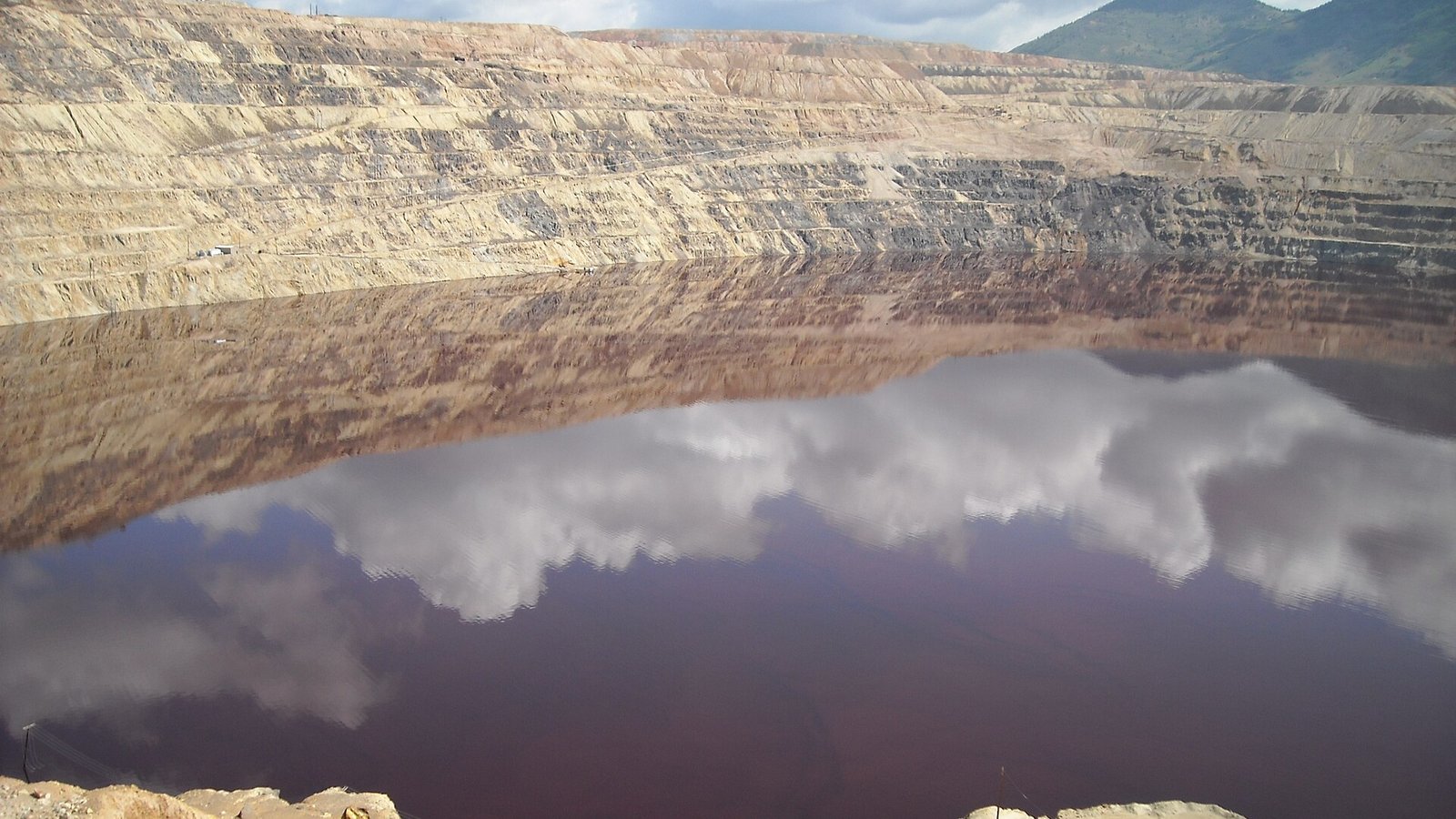

Visitors who pay to look into the Berkeley Pit from the viewing stand on Continental Drive often assume they are looking at the end of Butte mining. They are not. The pit, opened by the Anaconda Company in 1955, stopped producing in 1982, and the pumps that kept groundwater out were shut off soon after. It has been slowly filling with acidic, metal-laden water ever since.
But a short distance east, mining continues. Montana Resources, a privately held company, operates the Continental Pit, an open-pit mine that produces copper and molybdenum concentrate. The company restarted mining in the 1980s after Dennis Washington bought the Anaconda properties, and it is one of Butte’s larger private employers.
The water and the mine are linked
The Berkeley Pit is the centerpiece of one of the country’s largest Superfund complexes. Under agreements with federal and state regulators, Montana Resources and Atlantic Richfield, which inherited Anaconda’s liabilities, began pumping and treating pit water in 2019 to keep the level below a protective threshold. Treated water is discharged to Silver Bow Creek.
Mine operations and cleanup now run side by side. Water from the Continental Pit’s processing is part of the overall system, and the company’s tailings storage north of the Berkeley Pit is one of the most closely watched structures in the city.
Why it matters locally
For Butte, the mine means hundreds of wage jobs, a large share of the local tax base and steady contracts for trucking and repair shops. It also means the town’s oldest argument never quite ends: how to keep mining jobs while finishing the work of cleaning up after a century of it.
The viewing stand is open seasonally, usually spring through fall.