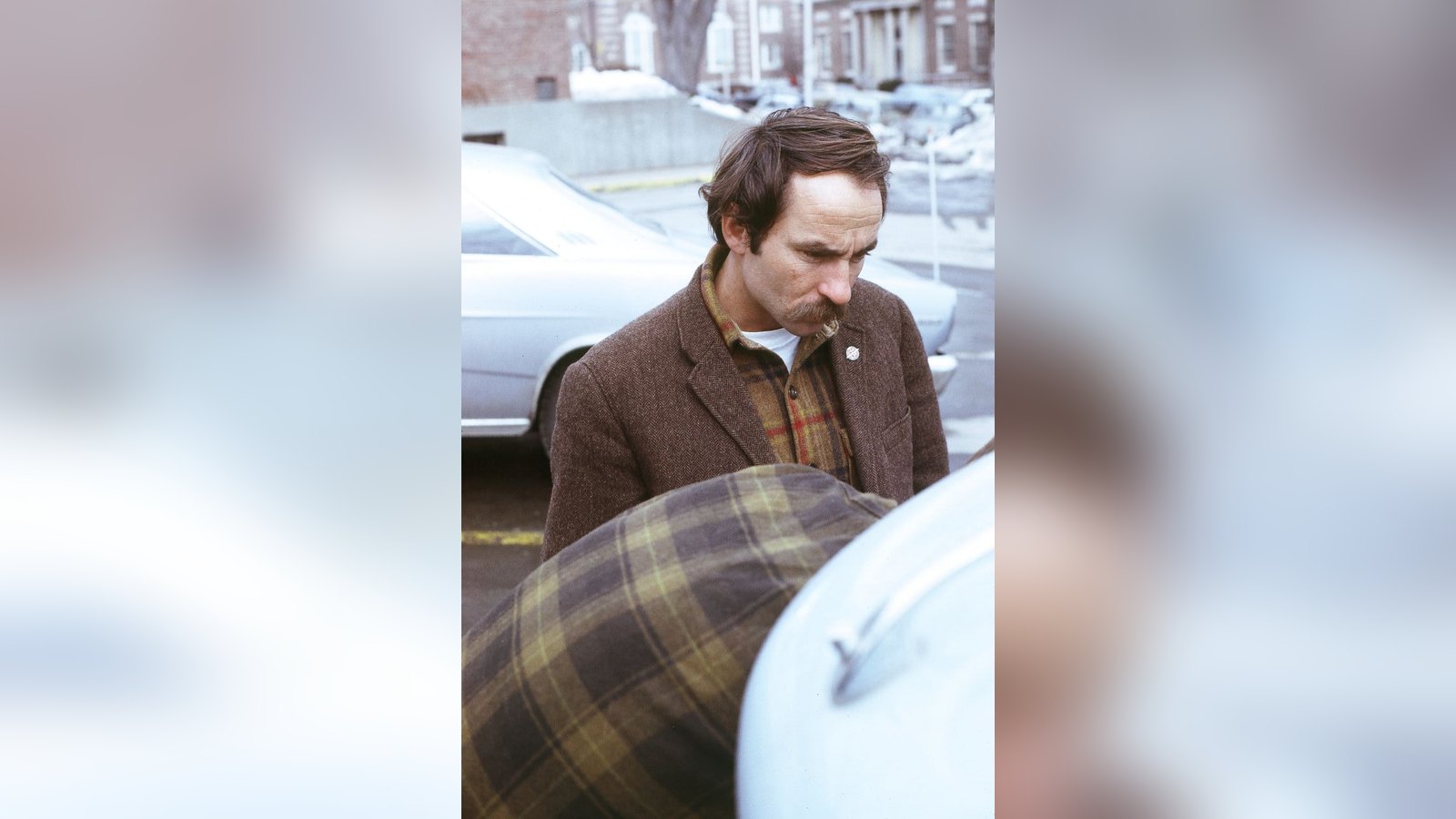
Yvon Chouinard began as a blacksmith’s apprentice of his own making, hammering climbing hardware in Southern California in the 1950s. He ended up the founder of Patagonia, a clothing company whose ownership he gave away in 2022 to fund work on climate change. Along the way he became one of the most closely studied business figures in the outdoor world.
He was born Nov. 9, 1938, in Lewiston, Maine. His father was a French Canadian handyman, mechanic and plumber, and the family moved to Southern California in 1947. As a boy Chouinard started a falconry club. Studying falcon nests led him to rock climbing, and he taught himself blacksmithing so he could make his own gear.
From pitons to Yosemite walls
In 1957 he bought a used coal-fired forge and started making steel pitons, selling them from his car. He climbed hard as well. In 1961 he made several first ascents in western Canada with Fred Beckey. In 1962 he and Tom Frost made the first ascent of the Northeast Face of Disappointment Peak in Wyoming’s Teton Range. In 1964 he was part of the team that made the first ascent of the North America Wall on El Capitan in Yosemite, without fixed ropes. A year later he climbed the Muir Wall on the same cliff with T.M. Herbert.
By about 1970 he had concluded that steel pitons, hammered in and pulled out again and again, were damaging Yosemite’s cracks. In 1971 and 1972 he and Frost introduced aluminum chocks, including Hexentrics and Stoppers, that climbers could wedge into cracks and remove without a hammer. The change helped drive what became known as clean climbing. The two men also redesigned crampons and ice axes for steeper ice, and Chouinard wrote Climbing Ice, a book credited with helping launch modern ice climbing.
His first company, Chouinard Equipment, filed for Chapter 11 bankruptcy protection in 1989. Employees acquired its assets, and the business was reestablished as Black Diamond Equipment.
Patagonia
The clothing business grew almost by accident. After a trip to Scotland around 1970, Chouinard sold rugby shirts that did well. Patagonia was founded May 9, 1973, and is headquartered in Ventura, California. He had climbed Cerro Fitzroy in the Patagonia region of South America in 1968.
The company became known as much for its practices as for its jackets. In 1984 it added an on-site cafeteria with vegetarian-focused food and on-site child care. In 1986 it committed to giving 1% of sales or 10% of profits, whichever was greater, to environmental activism. In 1996 it began using only organic cotton after an environmental audit. In 2002 Chouinard founded 1% for the Planet, and Patagonia was the first business to pledge 1% of annual sales. In 2012 the company created Patagonia Provisions, a food division.
Patagonia also took public stands. In 2016 it pledged 100% of its Black Friday sales, a total of $10 million, to environmental groups. In 2017 it sued the federal government over reductions to Bears Ears National Monument, which was cut by 85%, and Grand Staircase-Escalante National Monument, cut by almost 50%.
Giving the company away
In September 2022, Chouinard transferred the company’s voting stock, about 2% of total stock, to the Patagonia Purpose Trust. His family retains control of the voting stock through that trust. The nonvoting stock went to the Holdfast Collective, a 501(c)(4) organization. A $17 million gift tax was assessed on the voting-stock transfer. The stated aim was to direct profits toward fighting climate change.
Chouinard married Malinda Pennoyer in 1971. They have a son, Fletcher, and a daughter, Claire, both of whom work for Patagonia.
His books include Let My People Go Surfing (2005), The Responsible Company (2012, with Vincent Stanley) and Simple Fly Fishing (2014, with Craig Mathews and Mauro Mazzo). A fourth, Pheasant Tail Simplicity, appeared in 2025. Honors include the Sierra Club’s John Muir Award in 2018, honorary degrees from Bowdoin College in 2008 and Bates College in 2021, and a place on Time magazine’s list of the 100 most influential people in 2023. He was also executive producer of the 2014 documentary DamNation, which addresses dams.
Two later works examine his life and business: Jonathan Franklin’s A Wild Idea (2021) and David Gelles’s Dirtbag Billionaire (2025).
Sources: Wikipedia entries on Yvon Chouinard and Patagonia, Inc.